
Hi Karl,
It’s been a crazy week of UAAP action yet again, but amidst the rollercoaster of reactions and overreactions, two things have been consistent, FEU looking like a strong contender and UE still trying to win a game.
Round 1 is almost over and FEU is looking primed to take the first seed with strong performances strung together after losing in the season opener, but their loss to UST serves as a reminder that the ball is round and the power levels of these teams are so close. Last year’s finalists are putting up big games too, but have been showing signs of trouble, losing to teams they wouldn’t normally have lost to, but then getting big wins over teams that they would consider rivals (UP won against DLSU and Adamson while DLSU won against Ateneo).
Speaking of rivalries, there are sparks flying over at the women’s tournament. Defending champions UST Golden Tigresses held a commanding 90-66 win over their opponents in the previous finals, the NU Lady Bulldogs, sending the message that taking the crown away from them won’t be easy. However, what should have been an exciting encounter was marred by a post-match incident between assistant coaches. Reports say NU’s Paul Du made contact with UST’s Arsenio Dysanco during the post-game handshake, leaving Dysanco on the floor, requiring medical assistance.
While it’s fun to see rivalries of this magnitude, afterall, it was UST that broke NU’s historic stranglehold on the women’s basketball tournament that lasted 7 seasons. Now these teams have been duking it out in the finals for the past 3 championships. But hopefully the rivalry and competitiveness stays on the court where it belongs.
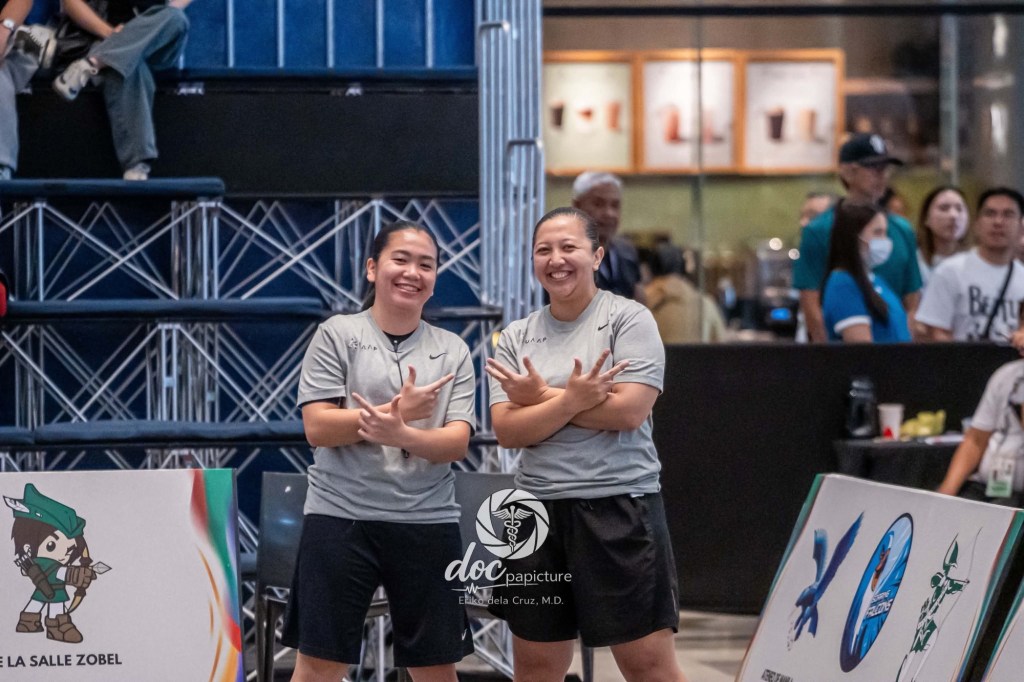
Although, I don’t know if you’ve noticed lately, there’s a certain noise that’s been missing amidst all the things going on. It was around this point in the season last year that we were meeting Commissioner Jai Reyes as he explained to us how the referees we being scrutinized amidst outcry from the audience and some of the coaches as well (especially from then UE Coach Gavina). Somehow the reaction to the officiating has been mostly tempered. Credit to the referees? The Commissioner’s office? Maybe the fans have just gotten used to how the games are called.
Whatever case it may be, the fact that forums aren’t full of complaints about wrong or missed calls, the coaches aren’t making snarky remarks about officiating and nobody has gone off on an expletive-laden tirade means something is working. Except maybe in the Adamson-UP game where the final sequence left people begging for answers (It’s always the Adamson-UP games). Commissioner Reyes hasn’t lifted his foot off the pedal when it comes to the FIBA-fication of the UAAP. At the start of the season, the Commissioner’s office took time to announce that the officials will expand the application of the FIBA rules with the emphasis on bench decorum.
We’ve already seen the effects of this. Coach Louie Alas was suspended for their game against FEU after being meted an additional technical foul after their game against DLSU. The kicker is that Coach Alas didn’t even have to commit the violatio to suffer the penalty. According to reports, it was assistant Kerby Reymundo who was called for the technical after taunting DLSU’s Marasigan. However, according to FIBA rules:
“36.2.2. A technical fould by any person permitted to sit on the team bench is a category 1 foul for disrespectfully communicating with or touching the referees, the commissioner, if present, the table officials or the opponents, or an infraction of a procedural or an administrative nature.
36.3.1. If a technical foul is committed:
xxx
By any person permitted to sit on the team bench, a category 1 technical foul shall be charged against the head coach and shall not count as one of the team fouls.”
So even if Coach Alas had nothing to do with the infraction, the penalty was charged against him. Fans will have their opinions about the “common sense” of the rule, but as an organization trying to do the impossible (call games at 100% accuracy), this kind of being a stickler for the process and the rules is all they have.
It’s similar to how the aviation industry has its protocol in place for every flight. Most people have a fear of flying and would rather take land transportation than a commercial airplane, yet flying commercial is one of the safest modes of transportation. According to studies, dying in a plane crash is a 1 in 11 million chance, while for cars it’s 1 in 5000. Yet few are hesitant to get into their cars or book a Grab to where they want to go, while more would need a whole comfort routine for takeoff and landing.
What keeps the aviation industry so safe is its attitude toward safety. Any time anything disastrous happens, everyone is placed on alert, protocols reviewed, decisions audited and heads that need to roll are sent to the nearest metaphorical chopping block. Unfortunately, despite their safety records, no person can guarantee 100% safety on a flight. The best they can do is come close, or keep trying. So it’s the images of plane crashes, catastrophic malfunctions and a whole plethora of other mishaps that get burned into our heads. All the successful flights don’t get noticed. It’s only when something goes wrong that people lose their shoes, and for good reason (because it often results in massive loss of life).
Similarly, that’s what having to referee anything is like. All the correct calls are ignored or forgotten. It’s the disastrously wrong ones that get called out and used as a reflection of the quality in general, and for not as good reason (nobody lost their life).
Much like the aviation industry that reviews its disasters through the data collected in their black boxes, the same is being done with UAAP referees. Last season, the Commissioner’s Office revealed the first round had a call accuracy of 92.5% for the men’s tournament, with on average meant 8.5 missed calls per game. This is useful data, that I frankly wish they would make more public, because it helps keep expectations in check.
The UAAP doesn’t wait for a catastrophic event to occur before reviewing and auditing their referees. Just because they dealt with the officials who ruled Erolon’s three a two last season, doesn’t mean there isn’t a chance it might happen again, but they should at least try, and trying they are, to come as close to 100% as they possibly can. However, one big pain point to this process is how it can sometimes leave stakeholders in the dark.
At the end of the Adamson-UP game, all Coach Nash wanted was a confirmation if there was a whistle before the time expired. Instead, the three game officials turned toward the scorer’s table, took off their microphones and exited the game floor. It took a table official explaining what the call was (none) before even the game announcer was sure that the game was over and the end-game rituals could begin.
Perhaps this was the protocol set by FIBA and the officials are just following it to the tee. But the frustrating part is, just like a black box, nobody would know for sure unless the Commissioner’s Office releases a clarification, or releases the data. Even after releasing the call-accuracy data after the first round last season, they declined to do the same again at the end of the season.
They have their reasons, and as fans we can only trust that it’s for the best.
While the process existing is definitely great, it doesn’t stop fans, coaches and athletes from expressing frustration when the communication side isn’t handled as gracefully as they’d want, especially in a high stress situation like sports.
The black box of basketball officiating will continue to work toward better officiated games, but we’ll just have to trust that it’s doing the work.
It’s Ateneo against UST at Q Pav on Saturday, feels like an intense matchup. I might need to get another prescription from the Doc for my blood pressure medication before I watch it.
See you at the games.
Yours,
Toby


Leave a Reply