
-
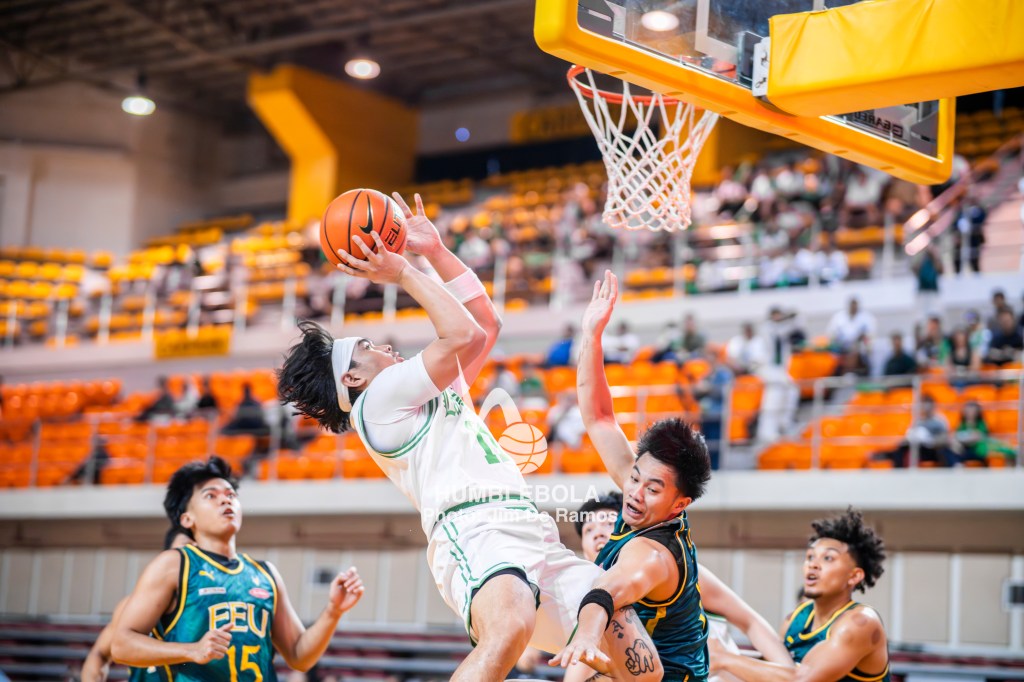
The Rewind: Ateneo’s Season of Grace

By Dr. Eriko dela Cruz
Welcome to The Rewind, where the Humblebola team looks back at the past and talks about details only a few may have noticed.
There’s a lot of talk surrounding the sudden slump of the Ateneo Blue Eagles following a stellar 4-0 start to the season. But this fanbase has seen this team down a similar hole and emerge victorious before.
Let’s rewind and go back to when the Ateneo Blue Eagles mustered up one big fight to turn adversity into glory.
The year was 2002, and there were great expectations surrounding the Ateneo Blue Eagles coming into UAAP Season 65.
Ateneo just made the Finals the season prior, the first time since 1988, against the DLSU Green Archers. It was a tight 3-game classic, with the Blue Eagles playing underdog against the 4-peat seeking La Salle. LA Tenorio showed everyone why he was a highly-sought after recruit coming out of the San Beda Red Cubs program, scoring 30 points in game three, as a rookie. The Blue Eagles lost the Finals series, but the potential for a championship was there. Many felt, they were on the cusp of dethroning their arch-rival if they could only just run it back.
In the offseason leading to UAAP season 65, Ateneo hired Joel Banal as the new head coach of Ateneo. Wesley Gonzales made his way back to the team, and the Blue Eagles won the PBL (the premiere semi-pro league at the time, for the benefit of our Gen Z audience) under Ateneo-Hapee-NeNaCo.
Ateneo opened their season with a 3-0 record, defeating the NU Bulldogs, another contender in the UST Growling Tigers, and the resurging FEU Tamaraws. What followed was a brutal six game stretch that saw the Blue Eagles win just one game. A suspension was handed out to reigning 2-time MVP Rich Alvarez after an alleged closed-fist punch against Adamson’s Jojo Hate. His absence was felt heavily in their rivalry game against the DLSU Green Archers. The Blue Eagles also suffered two consecutive overtime defeats to begin the second round. To make matters worse LA Tenorio suffered a hand injury in practice. The Blue Eagles held a 4-5 record at that point.
The Blue Eagles looked lost. However, if there was one thing that the Ateneo Blue Eagles had, it was heart.
Backup point guard (now Ateneo Blue Eagles manager) Epok Quimpo stepped up in the absence of Tenorio. Finding their second wind, Ateneo swept the remaining games of the elimination, even preventing a 14-0 sweep of the DLSU Green Archers at the end of the second round. They finished the elimination round with a 9-5 record, good for third in the standings. UE beat UST in their last game, giving them a twice-to beat advantage in the Final Four. The odds were stacked against Ateneo, but the good thing? LA Tenorio was set to return in the postseason.
Ateneo limited MVP candidate James Yap to four points in the first semi-finals game to force a do-or-die. Gec Chia scored a game winner to send Ateneo to the Finals. Larry Fonacier blocked Mac Cardona twice to seal game one of the Finals. Enrico Villanueva was awarded his MVP in game two. And in game three Epok Quimpo hit the dagger from three to give Ateneo the championship for the first time in 14 years.
And all that started with One Big Fight.
-
Referees under Scrutiny
By: Atty. Toby Pavon
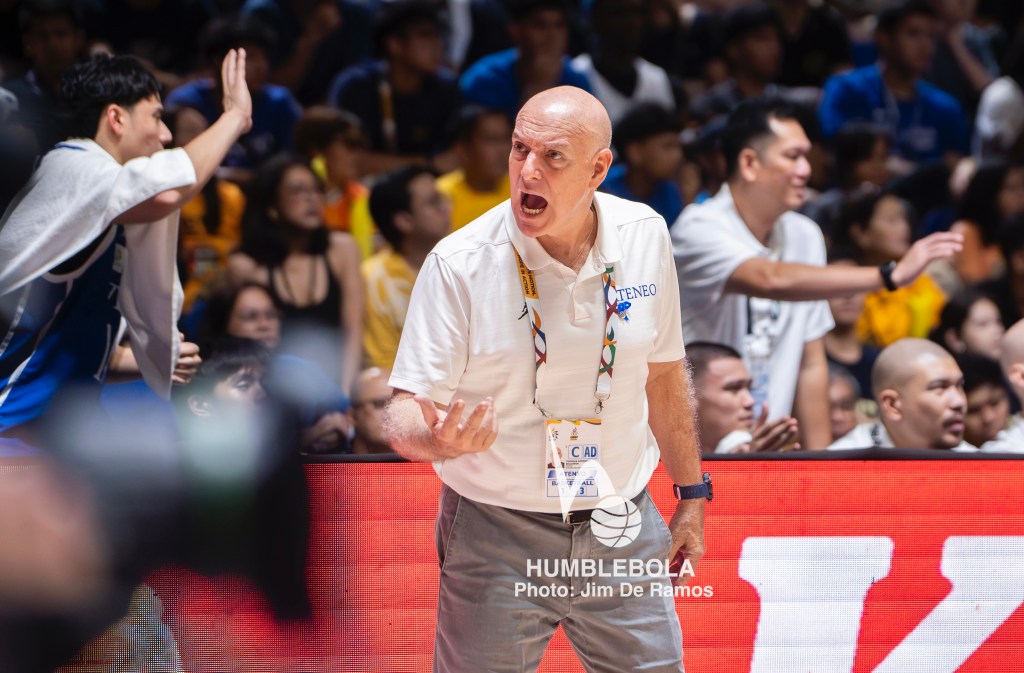
A lot has been said about the officiating in the first round of UAAP Season 88. The referees have been under a lot of scrutiny, from the coaches, the fans and even from the armchair analysts like ourselves. But it turns out, nobody scrutinizes these referees more than the Commissioner’s office.
At the start of the season Commissioner Jai Reyes stated his intention to heavily align the officiating with FIBA standards to prepare student-athletes for the international stage. In accomplishing this goal, the UAAP Commissioner has employed several measures to not only maintain, but continue to improve on the standard of excellence he and his team of deputies have set for the referees. These include referee audits in every game, game-time microphones on referees and a database of call-accuracy data which they can use to make decisions.
A lot of fans, myself included, mistakenly believed that nobody was overseeing the calls of these games, and that once a wrong call was made, there would be no recourse but to accept fate. Apparently not. The Commissioner’s office is constantly watching. In fact, every wrong call, every missed call that fans think they see, is recorded, and more.
Take for example, the three plays highlighted in our previously published piece. The Commissioner’s office invited us to see the data on those plays.
On the Jared Bahay three-pointer, the Commissioner’s office had clear footage of Jared Bahay’s toe on the line when the shot was released. The referees correctly called that a long-2. I wrongly called them out on it.
On the goaltending violation called against Mike Phillips, the Commissioner’s office logged it as a wrong call, flagging it as a clean block. However, I wrongly stated that the referees reviewed the call on the spot. According to FIBA Rules, a goaltending call can only be reviewed if it was called in the last 2 minutes of the 4th quarter or overtime, so it would have been inappropriate for the referees to review the call.
On the Matt Erolon three-pointer, the Commissioner’s office logged it as a wrong call. It was supposed to be a three-pointer. I wrongly believed nobody noticed and that nobody was watching.
So what did we learn?
First, that the Commissioner’s office is always watching. They record and audit every call made during the games, logging missed calls, wrong calls and correct calls. As fans, all we notice are the calls we feel are wrong, what we don’t notice are all the right calls, and there are a lot of them, an overwhelming lot of them. Based on the UAAP’s call-accuracy data, the men’s division has a 92.3% call accuracy for the first round. According to the Commissioner’s office, they use this data to identify which of the referees in the pool are performing at acceptable accuracy levels consistently. Those that don’t meet the UAAP’s accuracy standards are left off the pool for the following games.
By implementing this, the UAAP has set up a system which uses actual data, not just whims and emotions, in determining whether a game was well officiated or poorly officiated. Using this data only the most consistently accurate referees are left in the pool. Referees who have officiated with poor accuracy have been suspended or even banned. The UAAP sees them and holds them to account.
Second, the UAAP is committed to enforcing FIBA standards as it is the pinnacle of non-professional basketball. This means strict implementation of every aspect of those standards, down to which calls may or may not be reviewed, the interpretations of violations, procedure and even bench decorum. Many take it for granted that the UAAP has already been adhering to FIBA regulations for many years and believe that what worked before should continue to work. But there’s a reason there’s so much emphasis on this change, because it is change. With a higher accuracy of calls, it’s possible that teams simply aren’t able to get away with violations that they used to in the past.
Something as simple as bench decorum and protocol are being standardized, aspects of the game that most people don’t give much thought to. From the number of chairs on the bench, to where players can sit, how they are supposed to come in and out of the court, FIBA regulations means something new for them to learn, and in school is the best place to learn this. Even coaches may need to adjust to the strict implementation of protocols. Coaches who have been around the game longer than many of us have been alive, are probably already set in their own ways, making conforming with FIBA standards a possible pain point.
This might not be the first time the UAAP has implemented a referee report card, but it’s the first season the Commissioner’s office has released the call accuracy data it collected, a welcome development in terms of transparency toward the teams and the other stakeholders. is the first season the UAAP has tracked call accuracy for the referees. The Commissioner’s office reported to the teams that the calls have been 92.5% accurate for the first round. Unless someone does the work and audits the calls from previous seasons, we’re going to have to consider that maybe the problem isn’t that the referees are making too many bad calls now, but instead, people have gotten used to the referees not making the right calls before.
Finally, the UAAP is indeed keeping an eye on the situation. Whenever there’s a perceived wrong call, the Commissioner’s office is taking note of it, reviewing it and grading it, together with the hundreds of other calls that didn’t garner the same violent reactions from coaches and fans. But if the call cannot be reversed or corrected on the spot based on FIBA rules, then that’s just how it’s going to be. It will be marked a wrong call, the call accuracy will be affected, and based on the data, the UAAP will impose the necessary sanction. The consistently accurate referees are kept in the pool while those with poor accuracy are kept out. A high standard keeps getting higher.
Even the voice data captured from the microphones placed on referees is used to evaluate their performance. It gives the UAAP insight not only into the thought process of the referee who made the call, but also the people around them, the coaches and players who had something to say to the officials. They could probably verify if a coach was given a warning for trying to ask a question. That’s the level of data gathering the UAAP engages in, and the amount of scrutiny the referees undergo each game. So the idea that the UAAP is not doing anything to address complaints or is not holding their referees accountable is simply wrong.
As we previously stated, refereeing is a thankless job, one where doing it right earns no praise but a single mistake draws the ire of rabid fanbases. In the UAAP the task is even more difficult because the stakes are higher, the games are more intense and the crowd intensity is unmatched. This is why the Commissioner has emphasized keeping a close watch on the people working the games to ensure that officiating is accurate, but based on how they have formulated their policies, it looks like what they won’t do is undermine their referees by breaking protocol to overrule them in situations they are not allowed to. Even at 92.5% accuracy, teams and audiences will still be able to spot a missed or wrong call or two every game. The referees will not be able to get everything right all the time, but it is reassuring to know the UAAP has mechanisms to keep improving.
As fans of the game, we all want the players to decide the outcome of games. But this also means having the players decide the outcomes of games within the rules. The referees serve to ensure everyone plays by the rules, sometimes this rigidity can feel frustrating, especially to those who are not used to that level of scrutiny. For the longest time, the fans have been clamoring for FIBA caliber officiating. The UAAP has done everything it can to give us a system that gives us the FIBA experience, perhaps we need to let more time pass to see if the UAAP is successful in achieving this goal, or if we as fans really wanted this shift to international caliber in the first place.
Moving forward, players on the court will continue to complain. Coaches on the court will continue to complain. Fans in the stands, in front of their monitors and phones will continue to complain. While all of that is happening, the Commissioner’s office is watching, holding the referees to account, employing a method that keeps consistently accurate refereeing in the UAAP pool– moving forward.
-
UAAP Season 88 has been *Cinema*
By: Kyle Reiner Pineda
This start to the UAAP Men’s Basketball season has been the most interesting in quite a while. The previous season’s Finalists currently sit at #4 and #5, while several teams have performed way above expectations, making this the most unpredictable season in a while where there’s no clear winner until the final buzzer.
When people said that this was going to be the most even UAAP season in decades, I did not believe it. After the first round of eliminations, I’m starting to get convinced.
The NU Bulldogs and the UST Growling Tigers sit at the top of the UAAP with 6-1 and 5-2 records respectively after proving they can match with the crowd favorites to be real title contenders this season. The wise coaching of Jeff Napa has steadied the ship with an emerging Jake Figueroa leading alongside Steve Nash Enriquez, Jolo Manansala, Omar John making big leaps from last season. Many expected them to play consistently, this being their signature for the past three seasons, but this time they’ve been able to elevate their game, taking down championship favorites along the way.
The host school from España is looking loaded from top-to-bottom. Collins Akowe is looking like a strong candidate for the FSA MVP with two games with at least 20-points and 19-rebounds against UP and Ateneo no less. Nic Cabanero, Kyle Paranada, and Fortsky Padrigao have all taken leaps as guards for the Growling Tigers to become a three-headed monster in the backcourt.
A logjam is currently forming within the 3-5 spots with the Ateneo Blue Eagles, the UP Fighting Maroons, and the DLSU Green Archers all having their fair share of highs and lows. The UP Fighting Maroons went on a 4-game win streak after starting the season 0-2 thanks to the showings of newcomers Rhey Remogat, Francis Nnoruka, and the emerging Gani Stevens with at least three double-digit scoring games each in their last four games. The loss to DLSU puts them right in the middle of the 3-team log jam for the lower two spots of the Final Four.
The Ateneo Blue Eagles came right out of the gates running, starting the season with a 4-game win streak, including a statement win against title-favorite DLSU. But they have since cooled down, losing all three of their remaining assignments in the first round. In that time, Kymani Ladi and Shawn Tuano have emerged as key players for this re-energized Blue Eagles squad, but overall it’s still the house of Jared Bahay who has established himself as the selfless leader of the team.
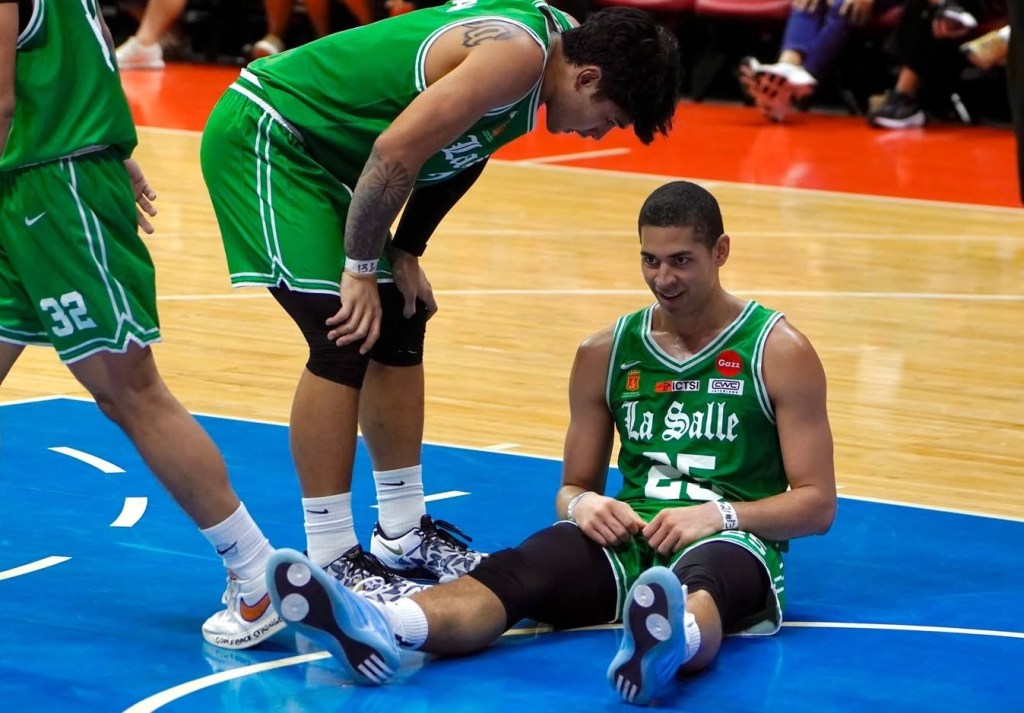
The biggest surprise of the season would be the title-favorite DLSU Green Archers teetering at the edge of the Final Four at 4 wins and 3 losses as things stand. Mason Amos is out for at least 6-8 weeks, the offense looks lost without star Jacob Cortez, and the squad looks like a collection of talent rather than a team. To many fans, it felt like this DLSU team lost games they shouldn’t have, but hope is not lost. Most of Coach Topex’s teams have started off slowly but are late-season peakers so Lasallians should hope the third time’s the charm.
Overall, UAAP Season 88 has been a Round 1 for the ages. Pure Cinema as the kids call it. You have surprising schools at the top of the standings, title favorites fighting to make the Playoffs, and games that will get you tuned for all 40-minutes. We’ve had our first 3OT with UST-Ateneo, *that* Adamson-UE where teams went on quarter-long runs, *that* UP comeback in the fourth to hand the Bulldogs their only lost so far, and a classic LaSalle-Ateneo Round 1 clash with the Katipunan school up by as much as 30, only to almost blow it all away in the end.
I have a general rule in Round 1 of taking the standings with a grain of salt as all teams are still jockeying for position at this time. I may have to skip the salt for Season 88 because these games have been pretty damn fun. One winning/losing streak could be all it takes to change the Final Four picture.
For the rest of the pack such as UE and FEU, there is still lots of basketball to play. Even the stories and narratives for the locals, FSA, teams, and coaches are up in the air to this date. These rounds of games are getting people to talk. One thing is for sure though, it looks like there’s parity in the UAAP again, and I’m glad it is.
-
Flagrantly Foul UAAP Officiating
by: Atty. Toby Pavon
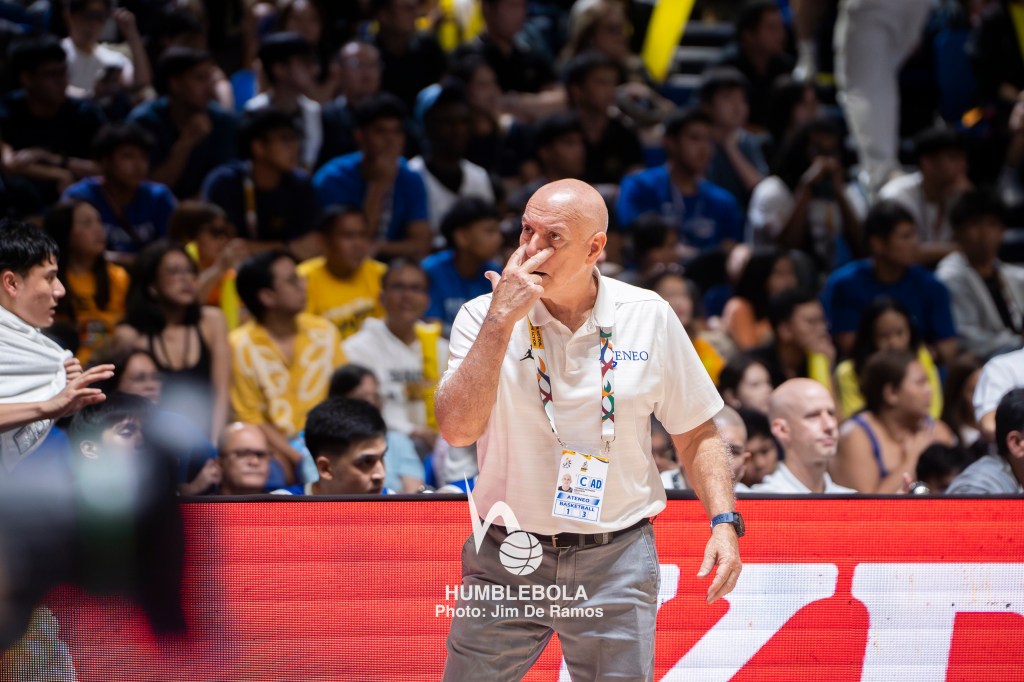
Officiating in the UAAP Season 88 Men’s Basketball Tournament has been terrible. Just ask Coach Gavina of the UE Red Warriors. His expletive laden tirade verbalized what was on everyone’s minds, the referees need to do better.
“They’re supposed to be the best of the best? Hell no! Get the f*ck out of here!”
“All week long, we talk about leaving the outcome of these games and the beauty of these games to the players, but what’s happening? There’s three idiots on the floor!”
These were the words of an angry Coach Gavina after his UE Red Warriors lost a nail-biter in overtime to the De La Salle Green Archers. That game saw Wello Lingolingo called for an unsportsmanlike foul after a scramble for the loose ball saw him diving onto Kean Baclaan on the floor. De La Salle’s Kean Baclaan unfortunately suffered an injury that forced him to be stretchered out of the game, but to Coach Gavina, it shouldn’t have been an unsportsmanlike foul on Lingolingo.
This call came with less than 5 minutes left in regulation, at a time when the Green Archers stormed back from a 21-point lead to cut the lead to 4. Wello Lingolingo was also the leading scorer for the Red Warriors at the time, putting up 23 points before being called for the disqualifying foul.
The UE Red Warriors stayed winless after the game, but a win over a perceived championship contender would have done wonders for their morale; or, a clean comeback win by the Green Archers would have been a beautiful display of championship resolve. But neither happened, and if Coach Gavina were to be believed, it was because of the referees.
Later in the game the referees made another blunder with game-changing implications. With less than 4 minutes left in the game, Mike Phillips swatted away what was supposed to be a gimme for Batumalin. The referees initially called it a goaltend. They reviewed the footage and still called it goaltend. Despite the ball still being on its way up, despite the ball not hitting the backboard, they called it a goaltend. 2 points for UE.
Had the referees made the right call, the Green Archers might not have needed overtime to complete their comeback. While the flagrant foul call on Lingolingo might have been a matter of judging intentionality, a goaltend is just a matter of checking the trajectory of the ball.
Unfortunately, this isn’t the first game the coaches voiced their frustrations over the officiating. With the first round almost over, several games have been marred with poor officiating dictating or almost dictating the outcomes of the games.
Winners and losers were not spared from the plague of poor officiating. Coach Jeff Napa remarked that the referees need to have a refresher on the rules despite his NU Bulldogs beating the DLSU Green Archers after several crucial calls and non-calls turned up the stress levels for everyone involved. Meanwhile, Coach Tab Baldwin tried, in so many words, to tell the media how he feels about the inconsistent officiating while maintaining a semblance of professionalism after his Ateneo Blue Eagles lost to the UST Growling Tigers in a triple overtime thriller.
The thing is, the officiating has been wildly inconsistent, even more-so than previous seasons. While most people would complain about judgment calls and non-calls, a missed foul, an overly thin foul, and the like, this year the officiating errors are reaching gaslighting territory.
When the first set of officiating blunders occurred, we thought it would be quickly addressed and the referees would do better moving forward. They did not. Aside from the procedural lapse of letting Adamson play with only 4 players on the court, a three-pointer from Matt Erolon was ruled a 2-pointer without review or warning. It’s as if the officials were experiencing a different reality from that of the players, audience and everyone else.
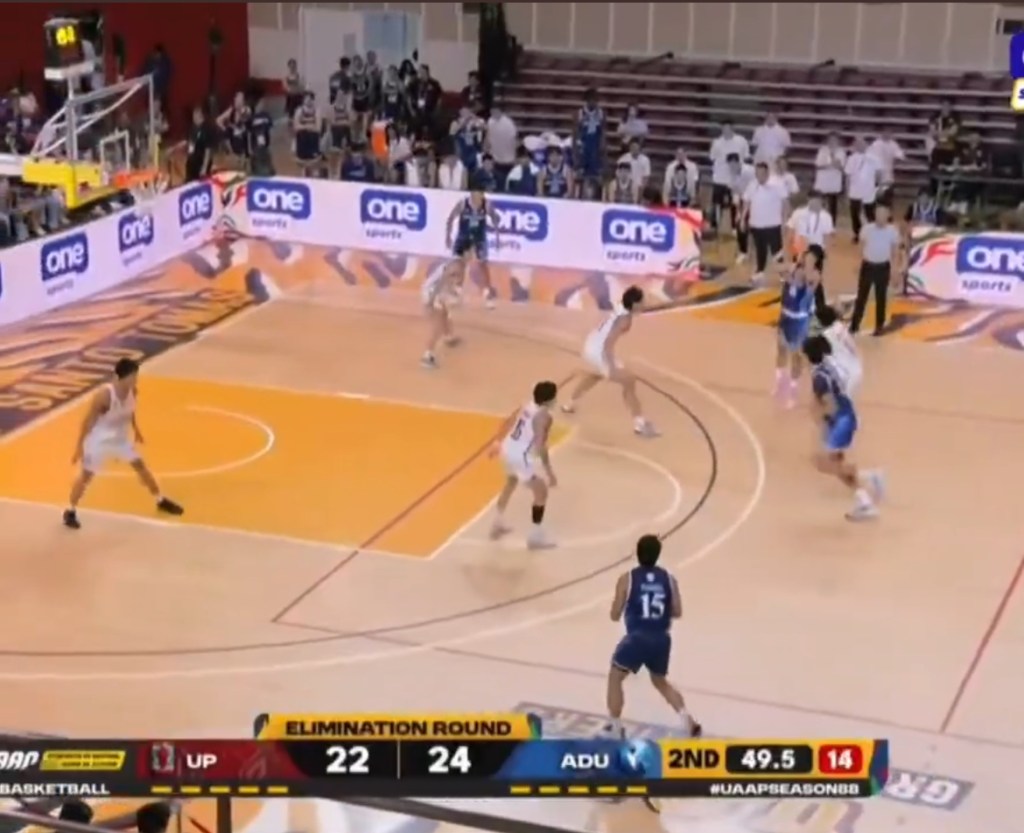
With how close the games have been, that one point difference matters. It spelled the difference between needing Ray Allen Torres’ game-winner or not.
Coach Nash Racela was left in disbelief as to how the referees could allow a team to play with only 4 players on the court, remarking it was the first time in his career that happened.
In Ateneo’s case, it meant the difference between winning and losing.
In the 2nd overtime of their game against UST, Jared Bahay threw up a stepback triple with 1:52 left on the clock. It bounced off the rim, but Josh Lazaro got the offensive rebound and got the ball back to Bahay who pulled up from the arc again and got the shot to go this time. The score should have been 82-81 in favor of UST, but after an extensive review by the referees, without showing the footage that was reviewed, the shot was ruled a 2 which meant Ateneo was down 2 instead of just 1.
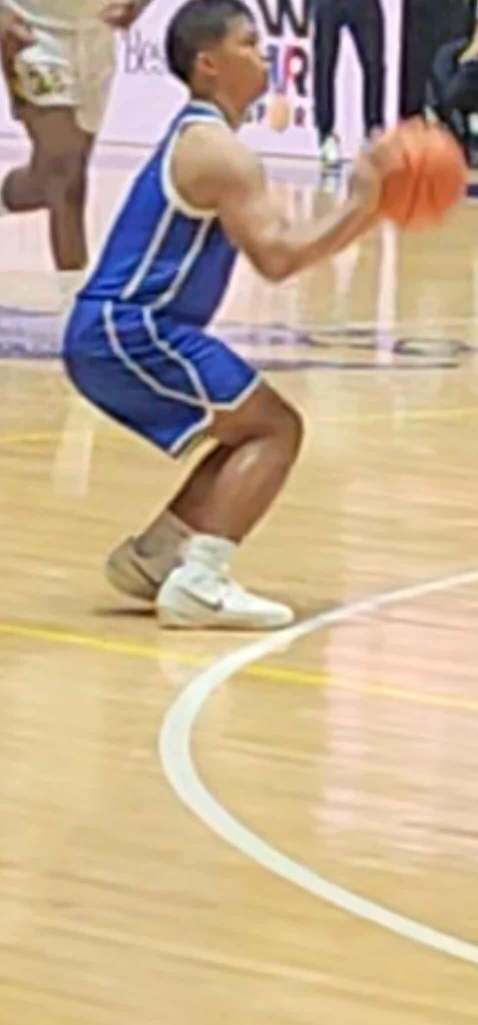
The remaining game seconds resulted in yet another tie, leading to the third overtime of the game. A third overtime that wouldn’t have happened if Ateneo had the extra point that the officials took away.
But this shot isn’t even on the minds of the coaches, players and fans who complain about the referees. When Coach Tab insinuated a “third team” being “disgusting” it was likely the inconsistency of the foul calls for both teams that brought about this reaction.
All teams and fans ask from the referees and officials of the UAAP is consistency. Apply the same standards enforced at tip-off until the final buzzer. The same actions should be or not be fouls, how much contact is allowed, and when can we expect players to be rewarded or penalized, because right now, everything is so arbitrary. Even worse is when the arbitrariness spreads into the dimensions of the court. Seeing feet behind the three point arc is binary– the feet are either behind the arc or not. But when the game officials, referees, scorer’s table and the army of officials all get it wrong when there’s clear evidence of their error, this poses a huge problem.
The poor officiating turns into gaslighting by the officials, making fans question the game being played before their eyes. Are they even watching the same thing? Are we even in the same reality anymore?
And of course, we aren’t supposed to expect an explanation from the league. The UAAP doesn’t owe us an explanation, anyway.
The UAAP strives to be a league where the tiniest details spell the difference between victory and defeat. Student-athletes have an almost professional knowledge of the game at this level just to compete because the race is so tight. If the officiating in these games continue to be so questionable, wherein even the most objective of calls can’t be done right, trust will erode in the officials, the games will be turned into a flip of the coin, or depend on the mood of the official’s table, and all the training, blood sweat and tears by these students will be for naught, because the true results of the games are being robbed from us right in front of our very eyes.
-
Resuscitating the Champion Ateneo Blue Eagles
By: Dr. Eriko C. dela Cruz
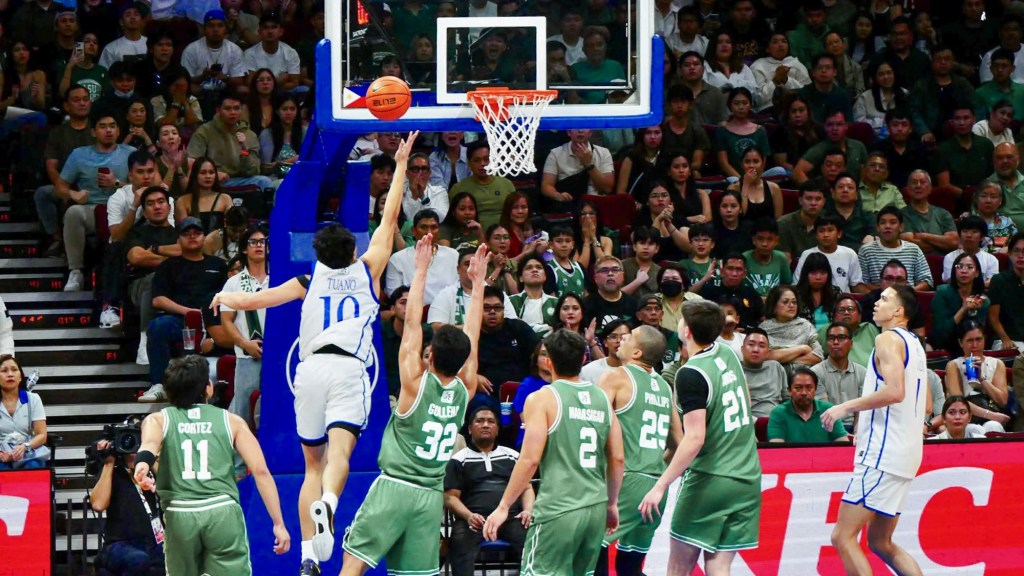
Four games into UAAP season 88, the Ateneo Blue Eagles have matched their win output from season 87.
It looks like Ateneo fans are still traumatized from the nightmare of the past season. After the first three wins against FEU, UE, and Adamson, many were still unsure about whether the Blue Eagles have regained their championship contender form, wary that they might just hanging onto false hope. It did not help that the first two games were escape acts, and the other was threatening for three quarters but pulled away in the fourth. A lot of people said that the game against the DLSU Green Archers would be the first true test, with Ateneo surviving 81-74.
So, are the Ateneo Blue Eagles championship contenders now?
Ateneo is a stacked team. Team captains Jared Bahay and Kymani Ladi may be head and shoulders above everybody, but beyond that everyone has the ability to have an explosive game. One game it might be Dom Escobar, the next it might be Jaden Lazo. Other veterans like Shawn Tuano, Ian Espinosa, and Josh Lazaro have shown they can take over when necessary.
More than being a stacked team, the current crop of Blue Eagles are executing and buying into the system that coach Tab Baldwin has put in place. You could see glimpses of this identity in the fourth quarter against the Adamson Soaring Falcons, and the first three quarters against the DLSU Green Archers (which in hindsight, makes a complete game put together). The offensive and defensive sets are more robust than seasons past, and it shows the growth and development of the players.
Strong as this team may be, there is a glaring hole that the team needs to be filled.
The signature of a Tab Baldwin championship team is the consistency in their mentality. In the Ateneo Blue Eagles teams that won the championship, from tip-off until the final buzzer, the Blue Eagles’ relentlessness stayed the same, no matter what happened in the game, whether they were down 10 or up 20. In the fourth quarter against La Salle, the referees’ calls were not exactly going their way. They were a bit rattled, and understandably so. Most of the players in the team are quite young, and the one-and-done crew were not necessarily used to these kinds of calls back in their hometowns. Of course those are not excuses (for the elite teams at least), but fortnunately it’s something they can still improve on as they gain experience.
Unfortunately for the Blue Eagles, it gets tougher as they face three teams that are seeking some form of redemption to end the first round in the UP Fighting Maroons, the UST Growling Tigers, and the NU Bulldogs. All three teams are also coming off slow starts and statement losses, looking to make their mark as contenders this season.
Unfortunately for the league, Ateneo will only get better.

About Us
Data-driven takes about basketball and everything around it.
Follow Me On
Subscribe To My Newsletter
Subscribe for new travel stories and exclusive content.
 Humblebola