
-
HumbleBlog #9 — Calm as a Bomb
Hey Toby,
Man, how do I even begin to talk about the current landscape of the Men’s Basketball Tournament in UAAP Season 89? I guess it would be best to look at the standings first?
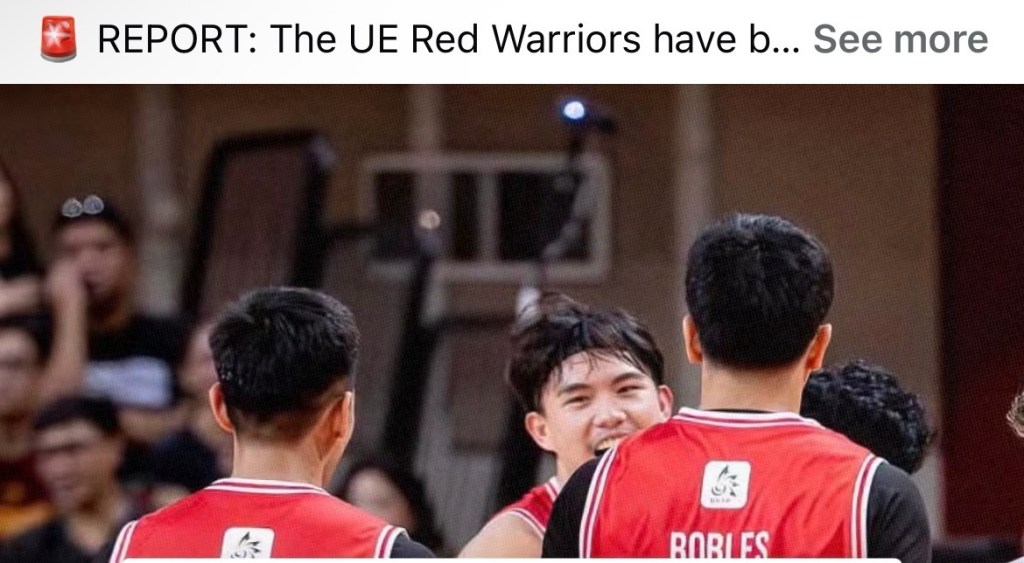
The NU Bulldogs and the UP Fighting Maroons have separated (using this term extremely loosely) themselves from the pack by going 5-2. NU’s standout rookie Macmac Alfanta delivered a team-high 14-point performance to stun the FEU Tamaraws yesterday, ultimately winning their round 1 matchup, 69-65.
As for last season’s runner-ups, they found themselves in dire straits against the cellar-dwelling UE Red Warriors on Saturday, October 17, for much of the contest, as UE led by as many as 10 points. But, as we’ve come to know from this version of the Fighting Maroons, their overwhelming talent will somehow emerge and win them the day, which was where former San Beda Red Lion and NCAA Season 99 Finals MVP James Payosing turned in a 16-point performance.
Nos. 3-7 is where it gets interesting. In the main event of Saturday’s matchups at the UST QPav, the UST Growling Tigers and Ateneo Blue Eagles duked it out. It seemed as if it would be a grit-and-grind matchup all the way to the final buzzer since no one could pull away convincingly. Then the third quarter happened, where UST made 11/21 field goal attempts (5-of-11 from deep), while Ateneo only made one in 14 tries. That 20-0 run pretty much ended the Blue Eagles’ hopes of a winning record to close out the first round, as UST won, 80-68.
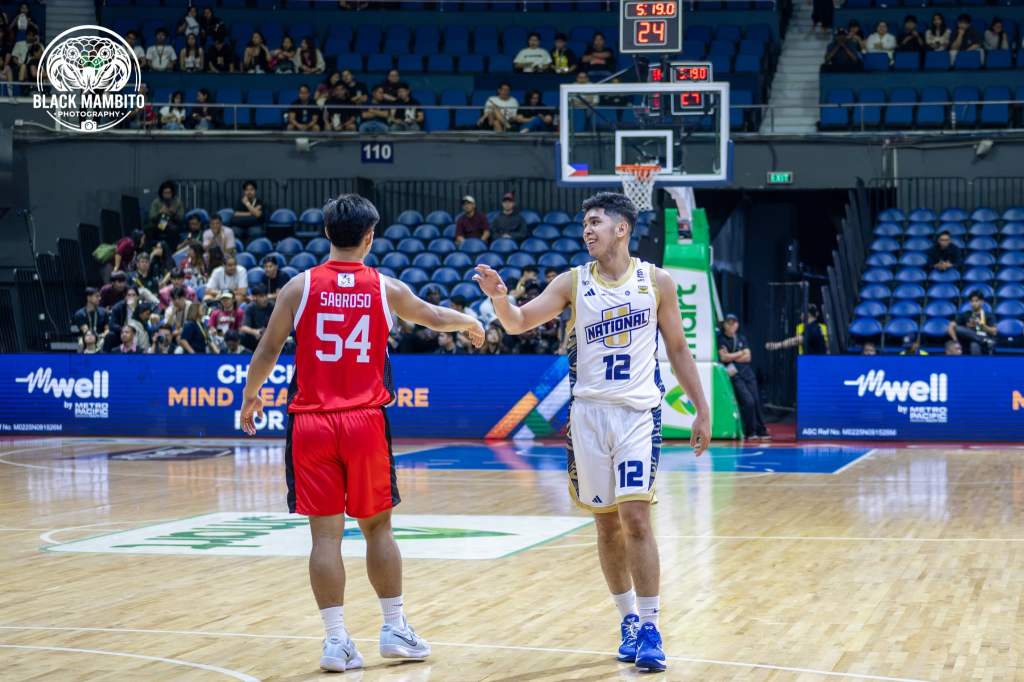
Meanwhile, Adamson continued to prove that preseason predictions are as finnicky as they come, when they dueled the DLSU Green Archers in yesterday’s marquee matchup. Let’s address the elephant in the room: that damned shot clock. Whenever it seemed as if either side was going to start building significant momentum, the 24-second shot clock would just decide that its job was done for the day and not count down. So much officials’ stoppage just to sort out the clock wore down both sides, with fans audibly voicing their frustration at the situation. No idea what happened there, but it’s got to be fixed sooner rather than later.
Anywho, back to the game. DLSU (hugely because of the shot clock sitch) played uncharacteristically undisciplined defense, as Adamson kept drawing fouls that were in the act of shooting. They did make a comeback (as the reigning kings of the UAAP were expected to do) and tied the game up. That was until Matty Erolon decided to break the 58-all deadlock with 30 seconds to spare with a straight-away devil-may-care three (which was Adamson’s lone three-point make in the fourth). Henry Agunnane made a nice layup, but Manu Anabo’s two made free throws practically sealed the game, giving Adamson a 63-60 victory and a 4-3 record — tied with UST and FEU.If you’re seeing how the entire tournament is shaping up to be as I am, it feels like a time bomb that’s waiting to explode. Like, sure, the race for the Final Four is extremely tight now, and all six teams (sorry again, UE) have a shot at earning a twice-to-beat advantage.
However, I have a feeling that this will be the first time in the Final Four era that a twice-to-beat team’s record will be at 9-5. Trust me, I did the research, and I went all the way back to Season 56 (AB History degree doing its work) to see if there had ever been a time when 9-5 was the best record in the league.
It’s never happened before.
If we apply UAAP math (thanks to the klasmeyt Flever Dignadice for the term) to the situation, there’s all reason to believe that any one of them ends up in either the 1 or 2 spot. Season 89 feels like, for the first time in a very long time, I have no idea who will make it to the Final Four.
You and I both know how long we (and many other hoop fans) have been hoping for parity in the UAAP, and now we finally get it. I am hoping and will always be supporting the Blue Eagles (malamang, that’s my alma mater) in their campaign to make it back in the Final Four. But unlike previous seasons, I won’t feel so bad if they don’t make it. The field is as level as it has ever been. You can make so many permutations of the good ol’ “X beat Y, Y beat A, A beat B. While X never beat B in round one, B lost to Y. By transitive property of UAAP math, X holds a win over B.”
It’s stupid, it’s light-hearted, none of it should make sense — and yet in the microcosm of the UAAP, it does. It’s everything that the UAAP stands for as a whole. Speaking as a 16-year watcher of the UAAP, fan of college hoops, and undying supporter of showing school spirit, I wouldn’t change it for the world.
Round 2 begins on Wednesday at the SM Mall of Asia Arena. For travel reasons, I obviously won’t be there, but the games are at the Blue Eagle Gym this weekend.
See you (and the entire UAAP community) then.
Mister-I-Only-Make-Threes-When-It’s-For-The-Game-In-Papawis-Setups,
Karl
-
HumbleBlog #8 — The Black Box
Hi Karl,
It’s been a crazy week of UAAP action yet again, but amidst the rollercoaster of reactions and overreactions, two things have been consistent, FEU looking like a strong contender and UE still trying to win a game.
Round 1 is almost over and FEU is looking primed to take the first seed with strong performances strung together after losing in the season opener, but their loss to UST serves as a reminder that the ball is round and the power levels of these teams are so close. Last year’s finalists are putting up big games too, but have been showing signs of trouble, losing to teams they wouldn’t normally have lost to, but then getting big wins over teams that they would consider rivals (UP won against DLSU and Adamson while DLSU won against Ateneo).
Speaking of rivalries, there are sparks flying over at the women’s tournament. Defending champions UST Golden Tigresses held a commanding 90-66 win over their opponents in the previous finals, the NU Lady Bulldogs, sending the message that taking the crown away from them won’t be easy. However, what should have been an exciting encounter was marred by a post-match incident between assistant coaches. Reports say NU’s Paul Du made contact with UST’s Arsenio Dysanco during the post-game handshake, leaving Dysanco on the floor, requiring medical assistance.
While it’s fun to see rivalries of this magnitude, afterall, it was UST that broke NU’s historic stranglehold on the women’s basketball tournament that lasted 7 seasons. Now these teams have been duking it out in the finals for the past 3 championships. But hopefully the rivalry and competitiveness stays on the court where it belongs.
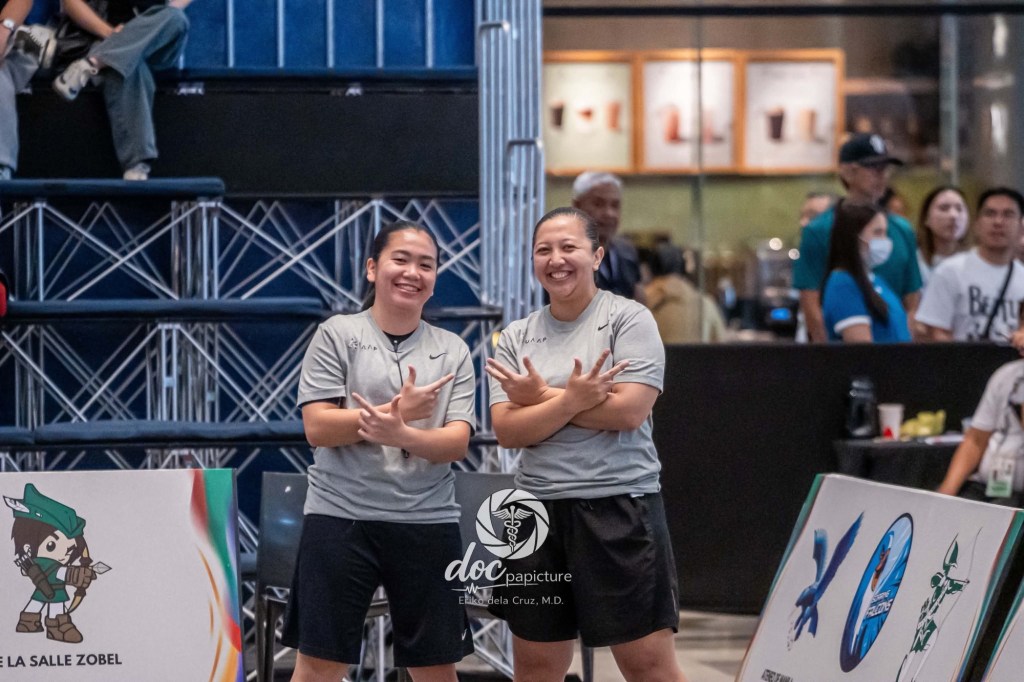
Although, I don’t know if you’ve noticed lately, there’s a certain noise that’s been missing amidst all the things going on. It was around this point in the season last year that we were meeting Commissioner Jai Reyes as he explained to us how the referees we being scrutinized amidst outcry from the audience and some of the coaches as well (especially from then UE Coach Gavina). Somehow the reaction to the officiating has been mostly tempered. Credit to the referees? The Commissioner’s office? Maybe the fans have just gotten used to how the games are called.
Whatever case it may be, the fact that forums aren’t full of complaints about wrong or missed calls, the coaches aren’t making snarky remarks about officiating and nobody has gone off on an expletive-laden tirade means something is working. Except maybe in the Adamson-UP game where the final sequence left people begging for answers (It’s always the Adamson-UP games). Commissioner Reyes hasn’t lifted his foot off the pedal when it comes to the FIBA-fication of the UAAP. At the start of the season, the Commissioner’s office took time to announce that the officials will expand the application of the FIBA rules with the emphasis on bench decorum.
We’ve already seen the effects of this. Coach Louie Alas was suspended for their game against FEU after being meted an additional technical foul after their game against DLSU. The kicker is that Coach Alas didn’t even have to commit the violatio to suffer the penalty. According to reports, it was assistant Kerby Reymundo who was called for the technical after taunting DLSU’s Marasigan. However, according to FIBA rules:
“36.2.2. A technical fould by any person permitted to sit on the team bench is a category 1 foul for disrespectfully communicating with or touching the referees, the commissioner, if present, the table officials or the opponents, or an infraction of a procedural or an administrative nature.
36.3.1. If a technical foul is committed:
xxx
By any person permitted to sit on the team bench, a category 1 technical foul shall be charged against the head coach and shall not count as one of the team fouls.”
So even if Coach Alas had nothing to do with the infraction, the penalty was charged against him. Fans will have their opinions about the “common sense” of the rule, but as an organization trying to do the impossible (call games at 100% accuracy), this kind of being a stickler for the process and the rules is all they have.
It’s similar to how the aviation industry has its protocol in place for every flight. Most people have a fear of flying and would rather take land transportation than a commercial airplane, yet flying commercial is one of the safest modes of transportation. According to studies, dying in a plane crash is a 1 in 11 million chance, while for cars it’s 1 in 5000. Yet few are hesitant to get into their cars or book a Grab to where they want to go, while more would need a whole comfort routine for takeoff and landing.
What keeps the aviation industry so safe is its attitude toward safety. Any time anything disastrous happens, everyone is placed on alert, protocols reviewed, decisions audited and heads that need to roll are sent to the nearest metaphorical chopping block. Unfortunately, despite their safety records, no person can guarantee 100% safety on a flight. The best they can do is come close, or keep trying. So it’s the images of plane crashes, catastrophic malfunctions and a whole plethora of other mishaps that get burned into our heads. All the successful flights don’t get noticed. It’s only when something goes wrong that people lose their shoes, and for good reason (because it often results in massive loss of life).
Similarly, that’s what having to referee anything is like. All the correct calls are ignored or forgotten. It’s the disastrously wrong ones that get called out and used as a reflection of the quality in general, and for not as good reason (nobody lost their life).
Much like the aviation industry that reviews its disasters through the data collected in their black boxes, the same is being done with UAAP referees. Last season, the Commissioner’s Office revealed the first round had a call accuracy of 92.5% for the men’s tournament, with on average meant 8.5 missed calls per game. This is useful data, that I frankly wish they would make more public, because it helps keep expectations in check.
The UAAP doesn’t wait for a catastrophic event to occur before reviewing and auditing their referees. Just because they dealt with the officials who ruled Erolon’s three a two last season, doesn’t mean there isn’t a chance it might happen again, but they should at least try, and trying they are, to come as close to 100% as they possibly can. However, one big pain point to this process is how it can sometimes leave stakeholders in the dark.
At the end of the Adamson-UP game, all Coach Nash wanted was a confirmation if there was a whistle before the time expired. Instead, the three game officials turned toward the scorer’s table, took off their microphones and exited the game floor. It took a table official explaining what the call was (none) before even the game announcer was sure that the game was over and the end-game rituals could begin.
Perhaps this was the protocol set by FIBA and the officials are just following it to the tee. But the frustrating part is, just like a black box, nobody would know for sure unless the Commissioner’s Office releases a clarification, or releases the data. Even after releasing the call-accuracy data after the first round last season, they declined to do the same again at the end of the season.
They have their reasons, and as fans we can only trust that it’s for the best.
While the process existing is definitely great, it doesn’t stop fans, coaches and athletes from expressing frustration when the communication side isn’t handled as gracefully as they’d want, especially in a high stress situation like sports.
The black box of basketball officiating will continue to work toward better officiated games, but we’ll just have to trust that it’s doing the work.
It’s Ateneo against UST at Q Pav on Saturday, feels like an intense matchup. I might need to get another prescription from the Doc for my blood pressure medication before I watch it.
See you at the games.
Yours,
Toby
-
HumbleBlog #7— A New Appreciation
Hey Karl!
The season is still pretty young but it has been exciting as all hell.
First off, it seems like the field for Men’s basketball has been level for the first time in a while. No team is undefeated, and though the UE Red Warriors are still winless, they showed some flashes of potential when they faced the UST Growling Tigers.
Have you also heard what happened to women’s football? FEU and UP accumulated a total of SIX red cards during their match. The Fighting Maroons’ starting AND backup keeper were both booked, forcing them to have a makeshift keeper between the sticks vs Ateneo.
But I guess I am writing to you guys because I have to tell you something.
WOMEN’S BASKETBALL IS AWESOME.
I have been out of the loop when it comes to women’s basketball in general for a long time. When I started watching, it was players like Lisa Leslie, Lauren Jackson, Sue Bird, and Diana Taurasi plying their trade in the WNBA. In the UAAP, it was a clash of two former MVPs in Cassy Tioseco of Ateneo vs Ewon Arayi of Adamson.
After that, I have heard of few players who have really made their mark in the game. I started following a bit more when our good friend Ged Austria became assistant coach for the UST Growling Tigresses.
Then one decision changed my life forever.
Last season, we just decided on a whim to cover the game between the Ateneo Blue Eagles and the UST Growling Tigresses. After all, Ateneo is our alma mater and Ged was coaching.
This was the game that made us decide to cover the women’s tournament more extensively.
Because of this, our photography skills sharpened, we met some great people, and our appreciation for the game became deeper. I am not here to compare and contrast the men’s and women’s games but let me say, both offer different kinds of excitement as a basketball fan.
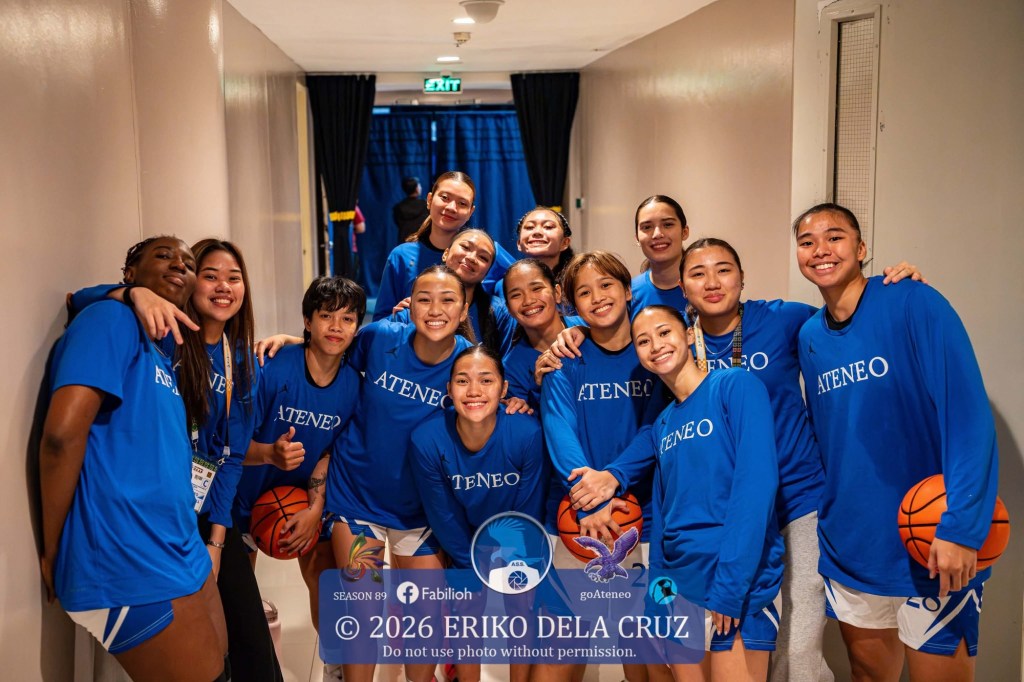
It was also because of that one fateful day that I decided that I wanted to serve the Ateneo Blue Eagles as their in-house physician (I still have to get used to be called their team doctor). Luckily, Coaches PJ Navarro and Zoe Chu took me in and the girls welcomed me as part of the team.
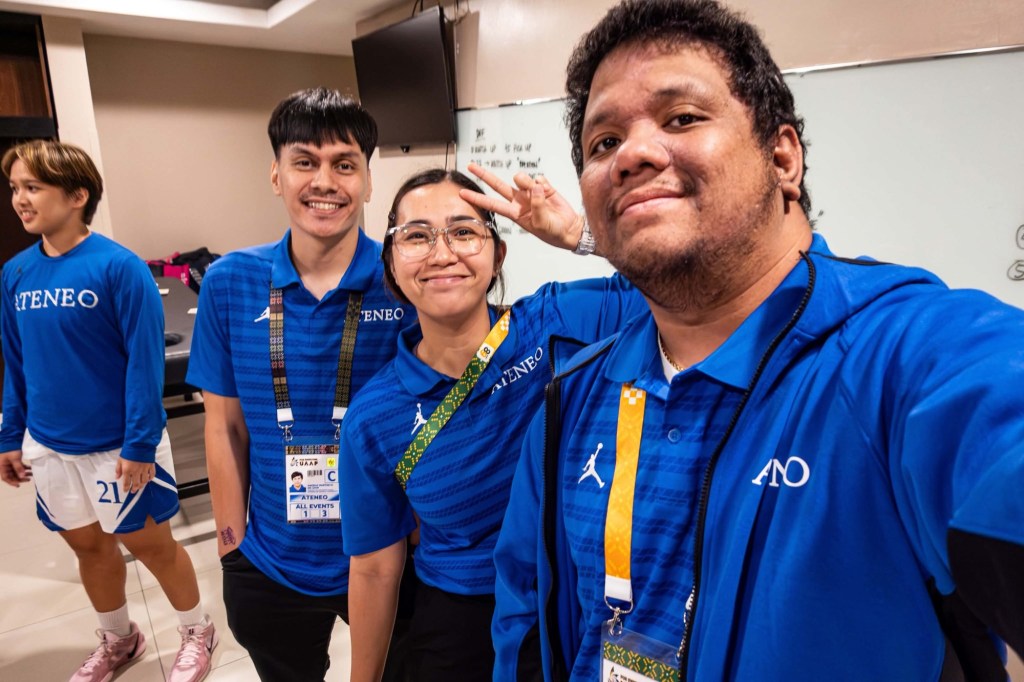
The season is still quite young so I know I will be able to experience more as part of the staff, and I will tell you more about it after the season ends. But because of this, I have seen the ins and outs of how a collegiate team prepares for every game. I have seen how hard these athletes work on the court, and still balance their academics with it. It gave me a new appreciation for the UAAP and the game that we love.
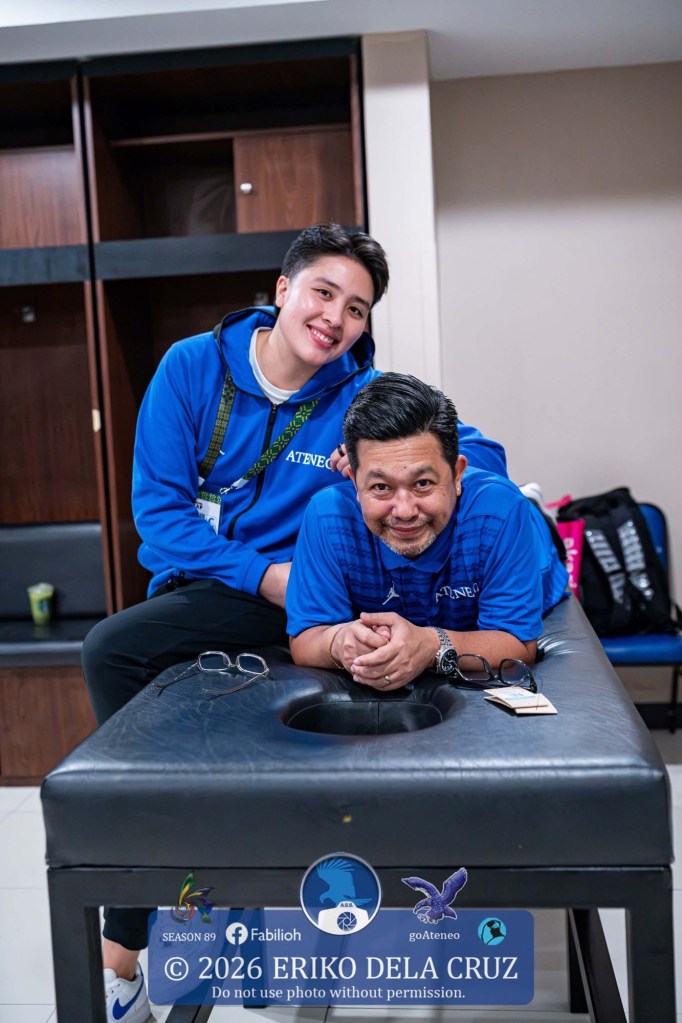
We face the NU Lady Bulldogs next and even though I will be out of the country for that game, I am damn sure supporting them. (Editor’s note: NU Lady Bulldogs won 87-77)
Your boy,
Dr. Eriko
-
HumbleBlog #6 — Justice for Divine and Rene
Hi Karl,
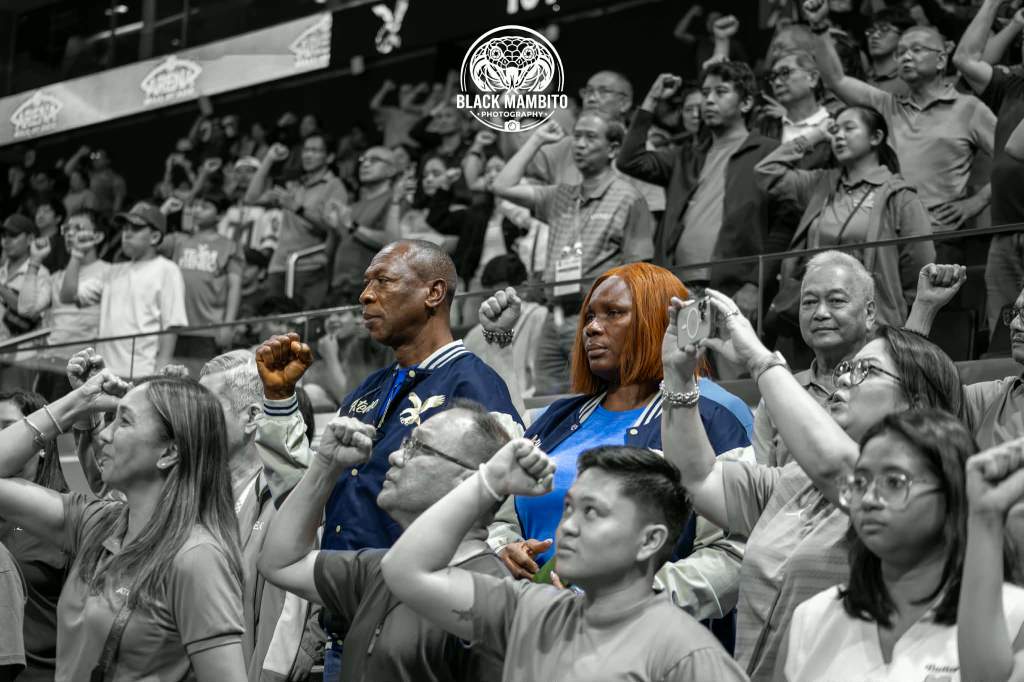
During the season opener of the Ateneo Blue Eagles, a lot of buzz circled around the attendance of Divine Adili’s parents, as well as the mother of Rene Bartebonia. Our astute photographers (@docpapicture and @mambito_shots) captured emotional moments of Divine’s parents sharing a somber smile as they remembered their son through the sport he played. It was a heart warming moment, for the Ateneo community, yet I noticed something a bit off. In the comments of our post, several Facebook users commented, “Justice for Divine and Rene.” which gave me pause.
As a lawyer by profession, I deal with questions of justice on a daily basis. Those comments made me wonder, what kind of justice are they after? In my line of work, justice is about the righting of wrongs. Justice comes in many forms, most directly through punishment from the justice system, sometimes justice comes through indirect means. However it comes, justice is only the first step toward healing for the victims and their loved ones.
Divine and Rene, their parents, their loved ones, do deserve justice.
But what is this in our comment section about a “Attention sa mga pumatay kay Rene” and “Sila ang mga player na sangkot sa pagkamatay ni Rene at Divine”. Some even commented “Mga hudas ng admu..” in a post featuring the photos of the Ateneo players.
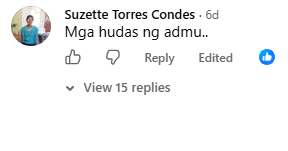
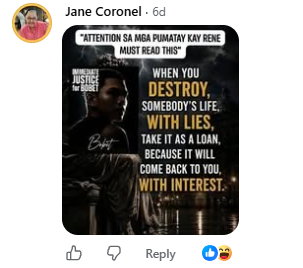
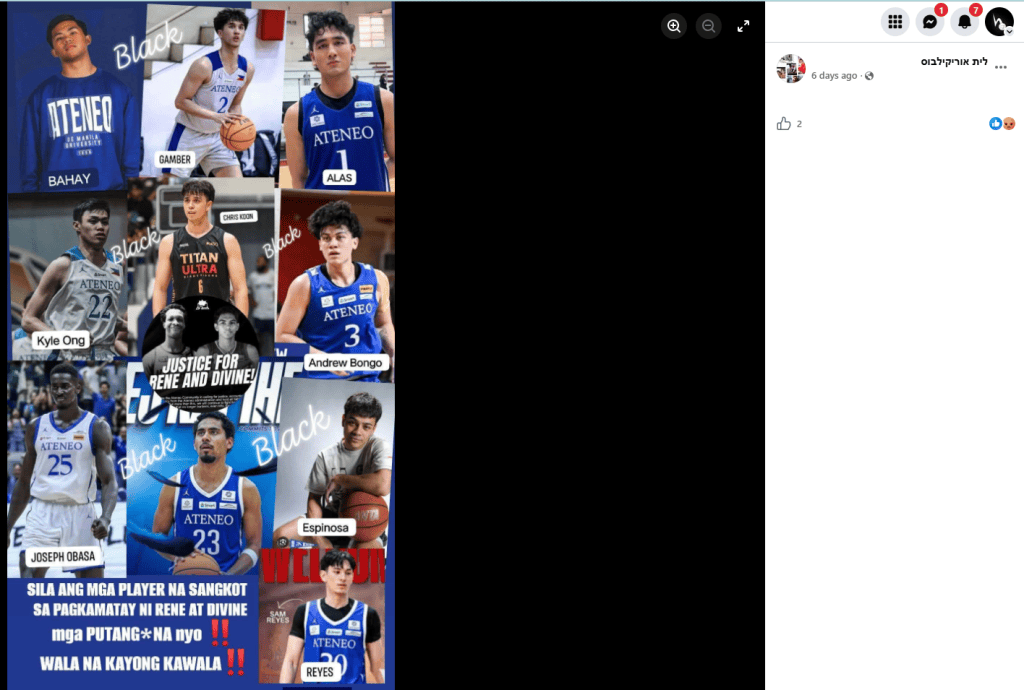
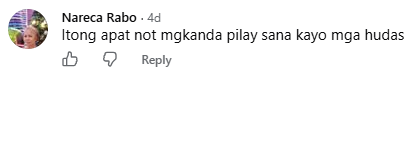
Are they saying it was the players who intentionally caused the deaths of Divine and Rene? Based on what?
In all reports that emerged regarding the tragedy, the student-athletes, Jared, Kieffer, all of them, had no part in planning the activity in Aurora. They were there to train. The people responsible, the person ultimately responsible for the training activity and who should have been looking out for their safety are Tab Baldwin and his coaching staff.
Charges have been filed against Tab and the others involved in the tragedy. The process is moving. Are the commenters saying the authorities have the wrong people under investigation?
Seeking punishment for those who have done wrong is a form of justice. But for it to be justice, the persons punished should be the people who did the wrong. Seeking punishment, retribution, vengeance against persons who were not responsible for the wrongdoing, is not justice. It’s bloodlust. Violence for violence sake.
Understandably, Rene Bartebonia’s mother continues to call for justice for her son’s death. After all, the wheels of justice are still turning, and there can be no peace without justice. The same way justice must be served for the many wrongs that people in our country suffered in the past. Be it the abuses of Martial Law, extrajudicial killings or the straight up plundering of public resources for personal gain, there will be no justice until the people responsible are brought to justice, there can be no healing or moving on until justice is finally attained.
And maybe justice is still far from reach, but what’s certain is that it will not be reached by grasping at the wrong people. There are no indications that the players of Ateneo were responsible for the deaths of Divine and Rene, yet somehow they have been turned into scapegoats by these Facebook commenters. Proxy targets for a class war between the haves and have-nots? Maybe. But if calling for justice is their goal, this is not going to achieve it. If they have a different motive, they’re probably being very effective at it right now.
It’s bizarre how these commenters are acting. It’s one thing to have a rabid fanbase overreact to every win and loss, but this, this has nothing to do with basketball, and by the looks of it, nothing to do with justice either.
In any case, I do hope for justice, not just for Divine and Rene, but for everyone that was failed by the system.
No basketball this time. Some things are just lifer than ball.
See you on the court.
Yours,
Toby Pavon
-
#HumbleBlog #5 — Turning Trenta
Whaddup Tobs,
As seven-plus years of friendship will attest, you shouldn’t be surprised that I’m replying only after two weeks. What can I say, life’s been kicking my ass around as of late (as it always does every September), and most of it is because of the UAAP.
The same exact thing that you, me, everyone in HB, and our respective friend groups love to infinity, yet always stress about when the time comes. It’s almost always for good reasons to.
The fact of the matter is that we’re not getting any younger. All of us are entering new phases in our lives (both in a personal and professional setting), and I love that for us. I fondly remember our group spending days and weeks talking about anything and everything about basketball like which rules would be best applied in the Philippine context, what we expect from the upcoming UAAP season, and whether Karlo’s offensive “bag” is really just him elbowing opponents and teammates alike. (To be fair, it isn’t, but it’s like 75% of it, so make of that what you will.)
If you remember at one point, most of us were convinced that we will (in a way) outgrow the UAAP and focus on our career paths as the adults from the generations ahead of us did — mainly to focus on building and sustaining families of their own. But for us special group of idiots, the UAAP men’s basketball tournament is a yearly spectacle that we can expect to occur in the latter half of the year — come hell or high water.
Season 89’s been an absolute banger thus far, I have to agree. Here’s what happened this past weekend if you missed out:· Reinhard Jumamoy led the NU Bulldogs in handing the UP Fighting Maroons their first loss of the campaign, ensuring that there would be no stepladder playoffs come late November.
· The FEU Tamaraws earned their first win with a 23-point drubbing of the UE Red Warriors. It was confirmed just hours before the game that head coach Chris Gavina had resigned.
· Jared Bahay, Travis Roberts, and Ian Espinosa combined for 42 points of Ateneo’s 73 to edge out Adamson. (my personal pick for game of the season so far) (editor’s note: Of course it is)
Regarding the Bulldogs, I said on Naveen’s podcast that they’d end up with a 6-8 record. With what I’ve seen from their first three games, I think I’ll end up being wrong here. Despite losing top talents Jake Figueroa, Steve Nash Enriquez, and Jolo Manansala, they’re making up for it by fully going all-in on head coach Jeff Napa’s guidance. Jumamoy continues to impress. The frontcourt dual big boys of Kenshin Padrones and PJ Palacielo play hefty, but have great finesse, and decent three-point shooting. Paul Francisco remains an important JR Smith-esque player that can turn up the scoring and play good perimeter defense. Hell, even rookie Mac Alfanta is showing early signs of being a “hooper’s hooper”.
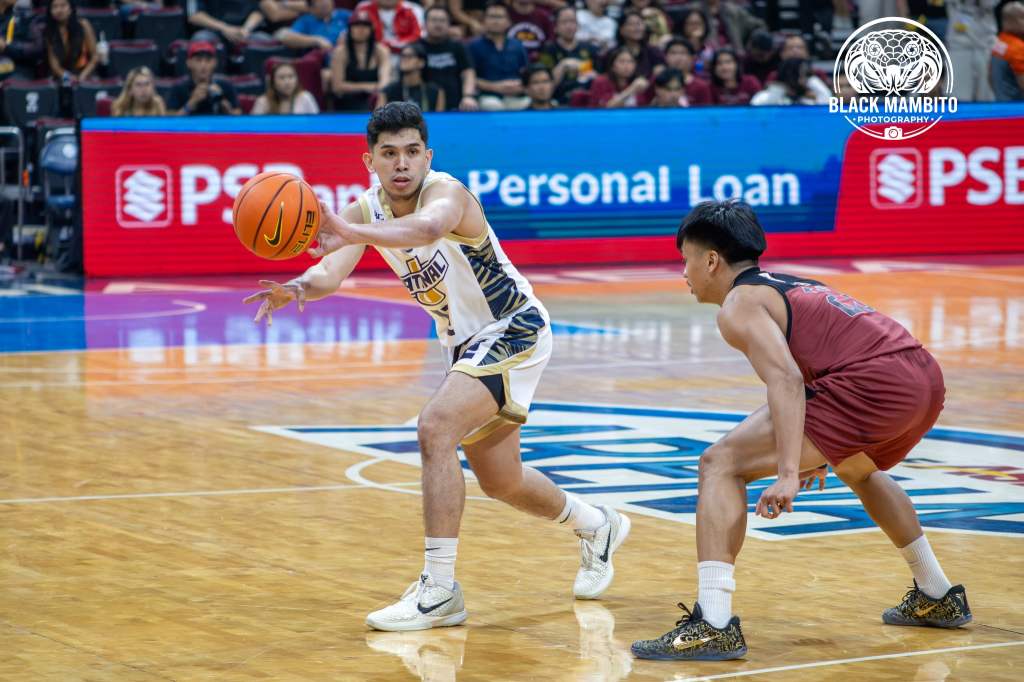
Meanwhile, the UE Red Warriors are going through yet another transition phase, as Paulo Hubalde steps in as interim coach following Gavina’s departure. My problem with that is this: Gavina isn’t the only problem with the program. Buti sana kung LAHAT ng may kasalanan sa losing streak mawala na sa programa because the university, its storied history in the tournament, and the ever-supportive students deserve showrunners that will put the right things at the forefront. I have no idea what the hell is happening behind the scenes, but as someone who appreciates history in all its forms — they need to get the f- outta here.
As for my Ateneo Blue Eagles, I’m happy to see Travis Roberts start to get his groove. Flev mentioned in the same podcast ep with Navs that he’ll be the key to unlocking Ateneo’s ceiling, and I fully agree. Jared Bahay and Kieffer Alas (who had an off game in this one) will always get their numbers somehow. With them operating as the 1A and 1B, there needs to be a clear No. 2 for Season 89, and good Lord, I wish for it to be Roberts. The Blue Eagles’ success always hinges on having an elite-level winger, and the one-and-done forward needs to put up these types of games against DLSU, UST, FEU, and especially UP.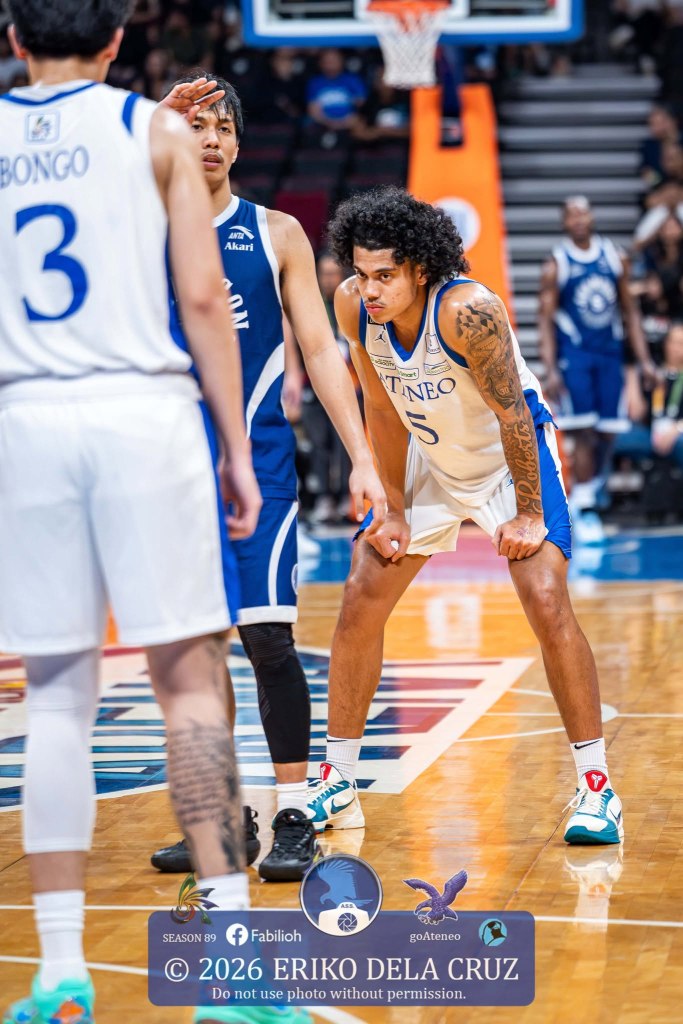
One more thing before I move on. I’ve been checking people’s thoughts on the season thus far over at r/UAAP, and man. People need to chill out a bit.
We’re not even done with the first round, and I’ve already seen some crazy takes. (Paraphrased for your reading sanity)· Topex Robinson deserves to be fired after losing to UST
· We’re not surprised that Ateneo beat Adamson
· Rhey Remogat is a liability and coach Goldwin Monteverde is overrated lol
· NU is lucky to be where they are
It might be the trentahin in me speaking, but the online discourse has practically revolved around hot takes and overreactions. Sure, we’ve had our fair share of overreactions in the past, but not to this extent. The negativity will always be a part of online discussions, we can’t turn back at this point. I think there needs to be a bit more positivity and grace extended when talking about the UAAP.
Now that’s out of my system, the women’s basketball tournament has also begun, with the defending champions, the UST Growling Tigers, beating the UE Lady Warriors, 103-58. I mean, what else would you expect from them at this point?
Three women’s basketball games are slated for Wednesday, September 30, at the SM Mall of Asia Arena: NU-Adamson (8 AM), Ateneo-UP (10 AM), and FEU-DLSU (12 NN). I’ll be there for the first couple of games, so I hope to see you there — should schedules align.
Also, regarding that special end-of-round-one project we’ve been discussing, I think me and the Doc have the perfect first guest for what we aim to do.
I was always told that turning 30 would bring great changes to my life, and to an extent it already did. Man, I had a couple of fans ask for a photo with me during a UAAP game. Absolutely cool experience, because seven years ago I was told I wasn’t cut out for sports journalism. I’m eternally grateful for your belief in me when I doubted myself three years ago. I owe a lot of who and where I am now to you and The Boys. Here’s to the next 10 years of The Boys and me in the industry.
It’s always gonna be HB over everything.
The man who (barely) has a plan,
Karl Batungbacal


About Us
Data-driven takes about basketball and everything around it.
Follow Me On
Subscribe To My Newsletter
Subscribe for new travel stories and exclusive content.

