
-
The Rewind: The Stratagem of Three Straight Timeouts
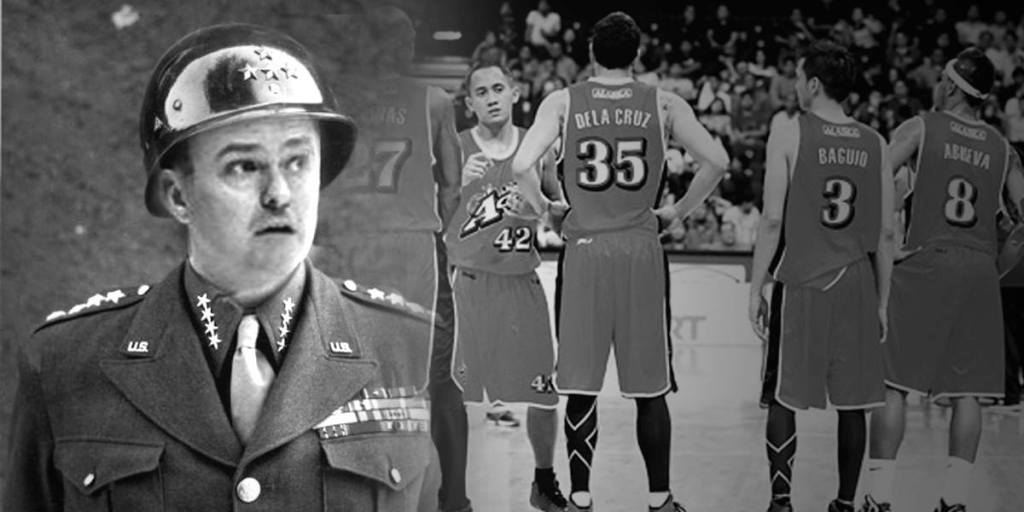
At the start of the historic game 7 between the Alaska Aces and the San Miguel Beermen, Aces Coach Alex Compton did something that had their opponent and the Philippine basketball world baffled.
As soon as they got possession of the ball following the tip-off, they called three full timeouts, one after another without any time going off.
Even Coach Leo Austria of the Beermen was left dumbfounded as his players were forced to do nothing while the Aces were busy warming up along the sidelines. This meant that the Aces would have to play without timeouts throughout the first three quarters, something no basketball fan would consider to be a boon for their team.
But wait, perhaps Coach Alex was simply applying something he learned outside of basketball.
NBA Champion Coach Larry Brown attributed his success to the study of the Art of War. The Art of War was an ancient manuscript often attributed to Sun Tzu of China in which he details the art of engagement and how turn the tide of battle onto your favor.
Perhaps Coach Alex Compton was also a student of the Art of War. Perhaps not. But when we put it in this context, placing his team in such a dire situation to begin the game made sense.
Losing three straight games while being on the brink of ending up on the wrong end of history, it’s likely that Coach Alex Compton saw only one way to beat the team that had the Behemoth that was June Mar Fajardo—Run them dry and gas them out early.
But to do that meant that his players would need energy and inspiration beyond measure. This is where the art of war kicks in. Coach Alex Compton wanted to push his players into desperation.
Sun Tzu writes: The art of war recognizes nine varieties of ground: (1) Dispersive ground; (2) facile ground; (3) contentious ground; (4) open ground; (5) ground of intersecting highways; (6) serious ground; (7) difficult ground; (8) hemmed-in ground; (9) desperate ground.
A PBA game can easily be described as open ground. Neither team is playing on their own court, both teams have the same amount of resources and both teams have the exact same goals and court to play on.
The problem with playing on open court is that the way to play it is to take it like a chess match. Unfortunately for Alaska, while the board might be even, San Miguel had two “queens” in June Mar Fajardo, tipping the odds in San Miguel’s favor.
To regain some of that lost advantage, Compton played to his players’ strength which was passion. Alaska was one of the most passion-driven teams in the PBA at the time. When they weren’t out-classing opponents, their drive to win fueled some of the most amazing come-backs we’ve seen in the league.
But how do you create this frenzy of inspiration that would drive up their emotions?
Sun Tzu writes: On hemmed-in ground, I would block any way of retreat. On desperate ground, I would proclaim to my soldiers the hopelessness of saving their lives.
What was once open ground has turned into hemmed-in ground wherein they are not only forced to fight, but forced to fight against a force that out-strengths them. Normally, the idea here is to use strategy, go slow and hang on fight with caution. But in Game 7, there is little room for caution.
By burning three timeouts early, Coach Alex not only blocked any way of retreat, but had his players drink the “Kool-aid” in what he probably sold to them as their last valiant stand a la Leonidas and his 300 Spartans.
But why would he turn poor ground into worse?
Sun Tzu wrote: Soldiers when in desperate straits lose the sense of fear. If there is no place of refuge, they will stand firm. If they are in hostile country, they will show a stubborn front. If there is no help for it, they will fight hard.
There’s a saying that desperate times call for desperate measures, and that one must never push a man to the point of desperation because that is when he will be capable of the unthinkable. The same applies here. By taking away their timeouts, they know that if they mess up or if they start digging a hole for themselves, nobody, not even their coach will be able to come and rescue them. This triggers the “fight or flight” instinct in all of them, forcing them to play harder than they have ever played their entire lives.
Unfortunately for Coach Alex and the Alaska Aces, the initial push of inspiration simply wasn’t enough. Not to mention that the San Miguel Beermen were also on that same desperate ground, their backs to the wall with no escape in a 0-3 hole. Against a team that seemed unsolvable, could you really blame Coach Alex for trying?
-
Why Schools won’t give student-athletes “that bag”
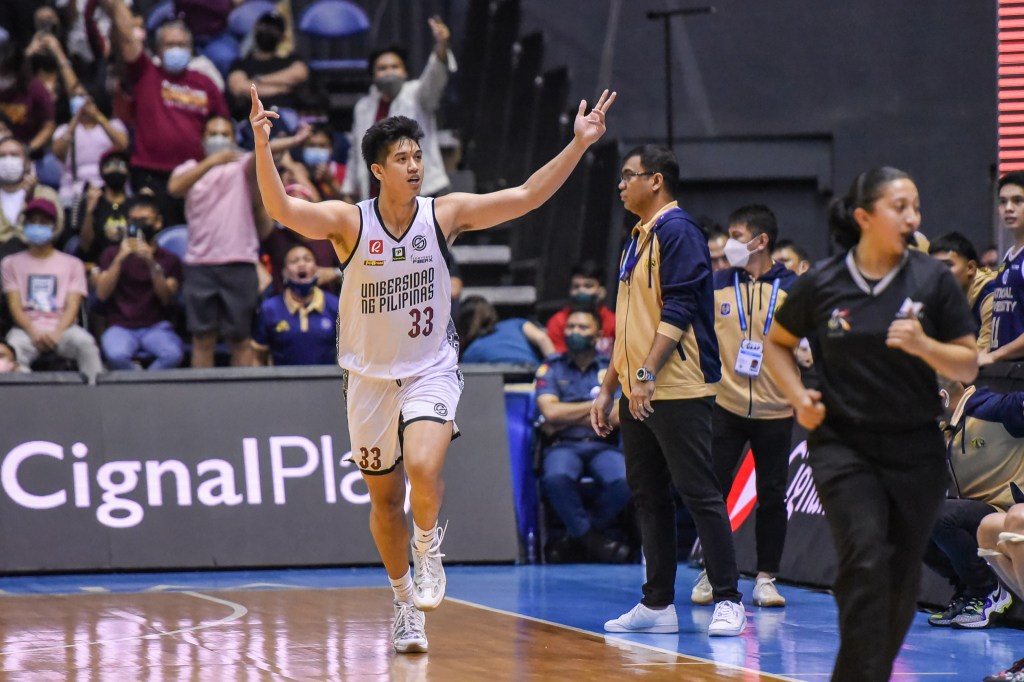
Every time there’s recruitment news about a student-athlete transferring to a school with a known wealthy sponsor, two questions immediately enter the minds of fans everywhere: 1) How much money was offered for them to make the transfer; 2) How much will they be earning to play for that school program.
No school will admit to flashing cash at a recruit for them to transfer and play for them. The official stance of the schools and the leagues they are a part of, is that collegiate leagues are amateur leagues, hence, there is a need to uphold the spirit of “amateurism” within it. This means turning a blind eye, or simply refusing to acknowledge reports of student-athletes getting hefty sums of money, properties and consideration in exchange for their commitment to the school.
To this end, there’s a significant portion of the vocal online space that believes college sports has long abandoned the spirit of amateurism, and that it is already a de facto commercial enterprise, and so, they can just drop the veil of amateurism. Embracing its commercial nature will allow leagues to create policies that allow all teams to engage in these highly commercialized practices and regulate them, evening the playing field for all (except for those who have less resources).
Unfortunately for this crowd, the schools can’t, and the schools wouldn’t want to.
Educational institutions cannot declare that they are commercializing their sports programs because it would be unlawful. The Student-Athletes Protection Act of 2014 provides in its declaration of policy that:
“SEC. 2. Declaration of Policy. – Article XIV, Section 1 of the 1987 Constitution recognizes the role of the State to protect and promote the right of all the citizens to quality education at all levels, and to take appropriate steps to make such education accessible to all. Further, Section 19(1) of the same Article provides that the State shall promote physical education, sports programs and competitions alongside training for international competitions to foster self-discipline, teamwork and excellence for the attainment of a healthy and alert citizenry. Thus, the State shall recognize and uphold the rights of student-athletes to further hone their skills and abilities in their respective fields of amateur sports without neglecting their education and general well-being.
It is the intention of this Act to protect and promote the rights of the student-athlete, who is, first and foremost, a student. To this end, the rights guaranteed by this Act and the obligations imposed on schools and athletic associations and their officials, athletic directors, coaches, members of the coaching staff, administrators, alumni, and representatives shall seek to ensure that the student-athlete attains quality education while honing his/her skill and reaching his/her full potential as an athlete in an amateur sports setting.”Republic Act No. 10676 – Student Athlete Protection Act of 2014
As such, educational institutions are required by law to maintain an “amateur sports setting” for the benefit of their student-athletes.
But aren’t student-athletes already earning from their play? No, not in the way you think at least.
According to the same law, student-athletes are allowed to receive reasonable allowances and support from their schools in order to train and compete. The UAAP for example, has fixed maximum allowances for athletes to be Php15,000 a month. This is hardly a living wage, especially as compensation for such valuable talents as theirs. In theory, these benefits are the means by which the schools can support their students that compete for them, because competing is hard.
This is a far cry from the supposed Php10-million, houses and lots offered to some student-athletes to compete for a school– the supposed “bag” that is supposed to be okay for them to “get”.
While student-athletes are overtly being given support to allow them to train and compete, they are not (as far as the public is concerned) directly compensated for their play. Even in the USA where the US-NCAA has lifted the iron grip on student-athletes being paid because of their status on the team, directly paying them is still prohibited. The US-Supreme Court ruling only opened the gates to athletes earning through their name, image and likeness (N.I.L.). This means they’re allowed to profit from the use of their likeness and name, meaning they can be on commercials, do events in their names, do paid endorsements of products and the like but not to be paid to play.
Being paid to play is what separates a professional athlete from an amateur. Being a professional athlete is also what separates an employee from a student.
This is why schools cannot “give” student-athletes “their bag”. They are mandated by law and State policy to maintain the amateur environment for their students to compete in. More than that, it would be against their interests to commercialize their leagues and their athletes.
Allowing for the explicit commercialization of student-athletes means that they cease to become student-athletes and instead become employees-of-the-school-who-also-happen-to-be-students. This drastically changes the dynamics because employees have different rights from that of a student-athlete.
One of the rights of an employee is security of tenure, which means their spot on the team cannot be whimsically taken from them without just or authorized cause. This was demonstrated when Alvin Teng successfully sued the Negros Slashers after they terminated him for calling in sick during the 2000 MBA Championship Round. This would mean schools cannot cut an athlete for performing poorly academically since their scholastic performance is not a valid condition for maintaining continuous employment.
Treating athletes as employees rather than students takes away the ability of schools to teach them discipline at best, and prevents them from focusing on anything other than their sport at worst.
More importantly, the engaging of professional athletes to represent a school in competition runs counter to the objectives of an educational institution. Ask yourself, “What good reason does a school have to spend tuition money or donor money to pay professional athletes to compete in their name?” This is different from funding a sports program where its students will have a chance to engage in different disciplines, part of the holistic development of students.
If we are to accept that the engagement of professional athletes by schools is in order to turn a profit through marketing or advertising revenue or sponsorship deals, then the next logical steps will be for them to maximize this model and continue to focus on commercializing not only their athletes, but the school itself. It won’t be long when schools cease to be educational institutions and become enterprises for the sale of exposure generated by their teams.
While it is only right for athletes to be able to profit from their play, looking at schools to open the floodgates toward explicitly giving them their bag might not be feasible for the foreseeable future. The status quo relies on the participants continuing to hold up the veil of amateurism, no matter how fictitious it may or may not be. Openly recognizing and embracing the commercialization of the leagues will have sweeping effects on all the stakeholders, the schools, the student-athletes, the boosters, the students and even the fans. Are they- nay- we ready for that change?
The trend of using what should be an amateur endeavor in order to earn a living is less indicative of the character of the athletes and schools that participate in the practice, but instead is more a telling symptom of the professional sports landscape– that there aren’t enough opportunities for athletes to make a living playing their sport.
Fans should rightfully call for athletes to be well compensated for their efforts, however that call for compensation should be hurled toward the professional leagues. Athletes who are deemed worthy of being compensated for their play should have more leagues, more options, to make this choice for themselves when they feel they are ready.
-
An Open Letter to LA Tenorio
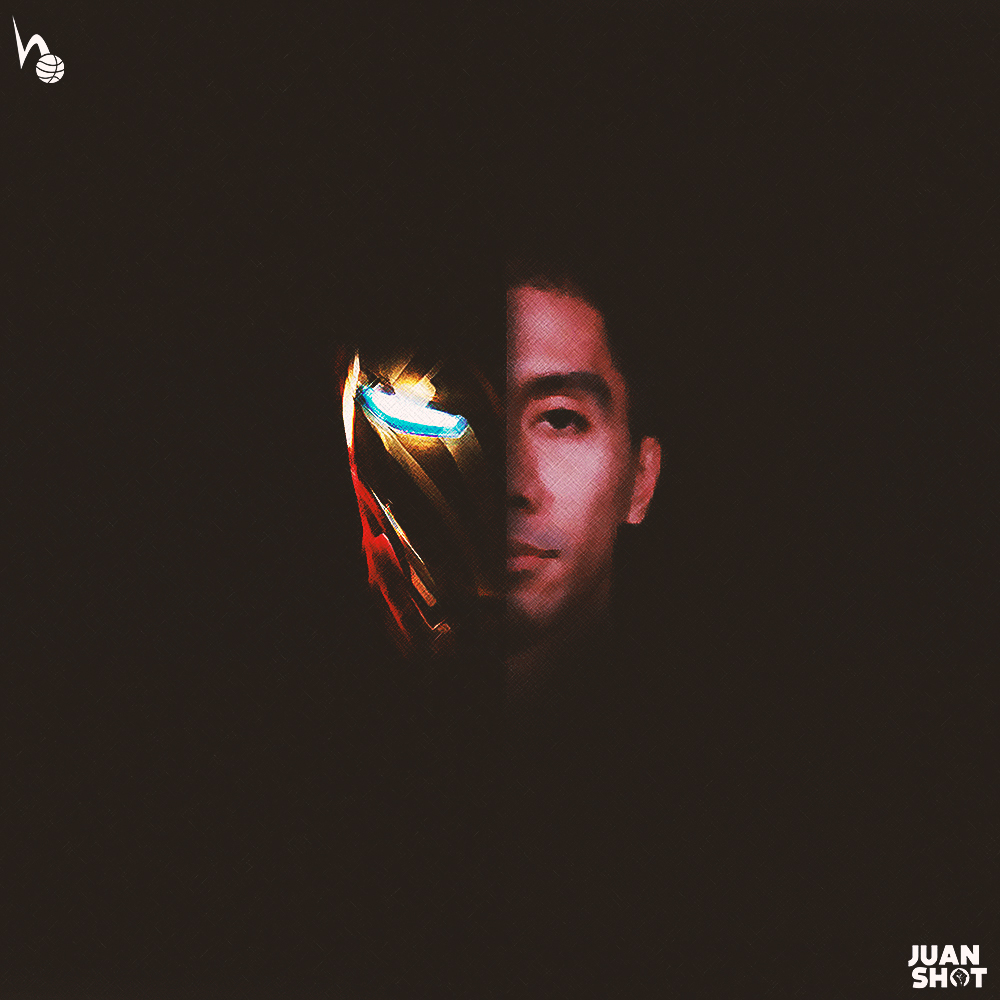
Eriko dela Cruz
Dear LA,
I was in Grade 6 when I first saw you play. You were fresh off dropping 30 points on your rookie year… IN THE FINALS– Against a stacked La Salle Green Archers. In your second year, you were the clear cut starting point guard for the Blue Eagles contending for the title. Things didn’t go your way in the middle of the season, hurting your wrist, sidelining you from the final four. When you made your comeback you helped lead Ateneo to its first title in 14 years. You were so good that I even had your jersey and wanted a pair of the Nike VC 1s and the Zoom Flight Turbine.
I was in high school when you played your last game in the Blue and White. It was against– again, La Salle. You carried that Ateneo team on your strong unbreakable back, but ultimately came a bit short in the second half. You were frustrated, you were hurting, and I felt it too. I knew however, that this was temporary. I knew that you would be a winner in every level you played in.
You won with Harbour Centre, with probably the cream of the crop of college recruits in the land that time. You won with Alaska, where you won Finals MVP with Cyrus Baguio. You won against Korea for the first time in ages with Gilas, on our home floor no less. You won with Ginebra, ending the Kangkong tag that plagued the organization for what felt like a lifetime. You battled it out against the best, whether it be in the Philippines or internationally.
Now, it’s time for a different, much bigger battle.
The basketball world was shocked when news broke out that you were diagnosed with Stage III Colon cancer. As a wannabe doctor, I know that this type of cancer gets diagnosed in the latter stages. But as someone who followed your career since college, I know what kind of heart you have. I know that you will give your heart and soul in beating this. Know that your family, friends and fans will be with you every single step of the way. More than touching a basketball again, I hope you get to touch more lives with your generosity, kindness, and fighting spirit.
One Big Fight, LA. Never Say Die.
-
Can they do that? The UAAP and its copyright issue
By: Toby Pavon
On March 19, 2023, UAAP Twitter was sent into a frenzy, not because of a big win in the volleyball tournament, or a key recruit announcement, but because of an email sent by the UAAP Media Team to the different media partners.
The email read:
“Dear valued media partners,
We hope this letter finds you well. We are writing to inform you of a new policy regarding the recording of games for the UAAP Season 85.
Effective immediately, we regret to inform you that recording of games, whether in short clips or in full, will no longer be allowed. This decision was made in compliance with the request of our broadcast partner, Cignal.
Please be advised that the only area within the game venue that will allow recording is during the post-game interviews at the media room. All other interviews with UAAP personalities should be conducted outside the venue.
We understand that there may be a need for game clips in your reports. If so, we kindly ask that you send an email to [redacted] to request for the necessary footage.
Moreover, we would like to remind you that Cignal holds the exclusive copyright of the UAAP videos. Hence, they reserve the right to issue copyright strikes on any UAAP videos posted on social media accounts.
We appeal for your utmost cooperation and understanding in this matter. If you have any questions or concerns, please feel free to reach out to the UAAP Season 85 Media Team.
Thank you for your unwavering support and cooperation.
Sincerely,
UAAP Season 85 Media Team.”
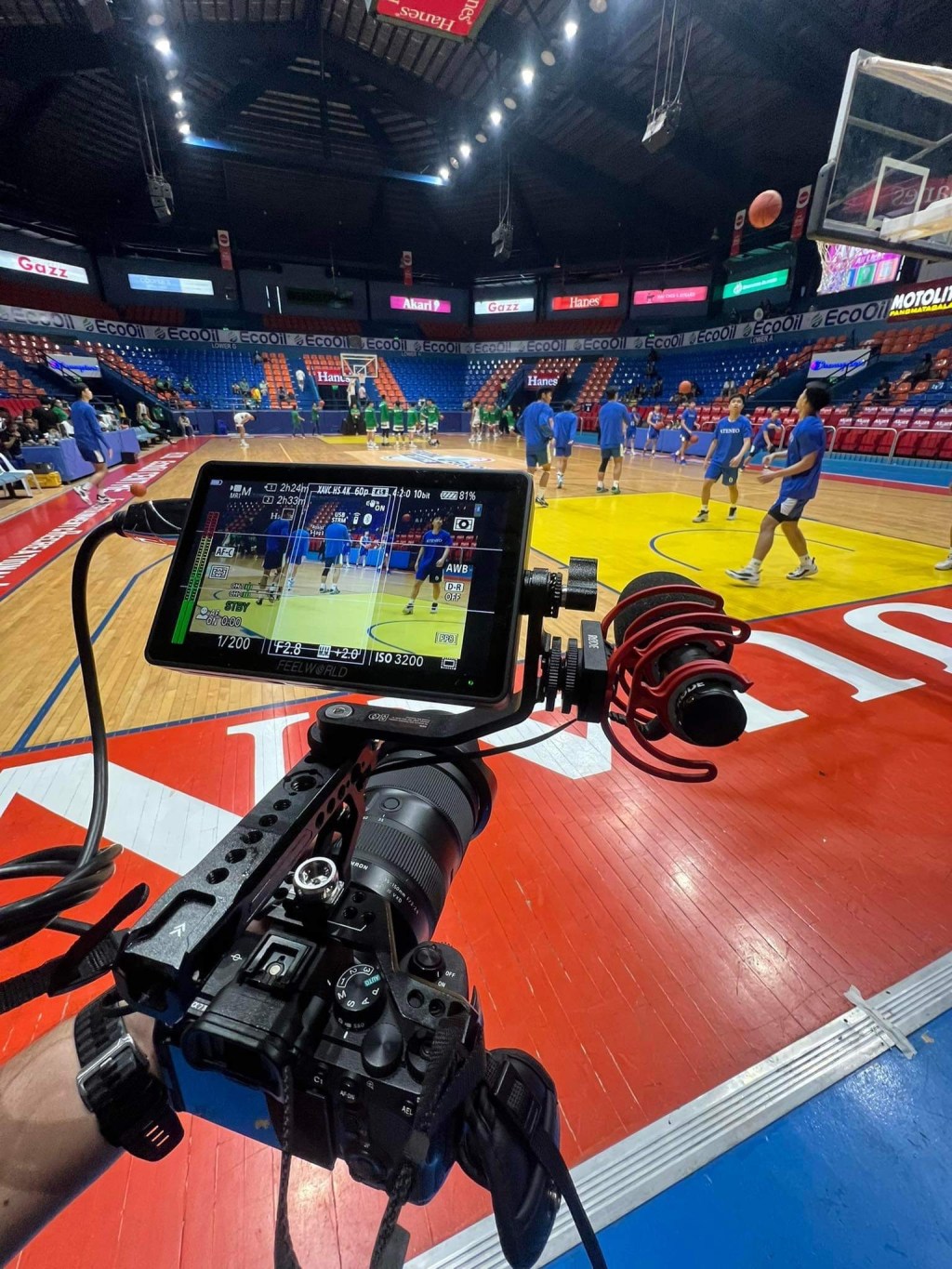
The uproar on social media stems from the implication in the letter that Cignal, the current copyright owner of the UAAP, is banning people, members of the media, from taking their own videos while inside the game venue, except inside of the media room.
This essentially means, no highlight reels, no cinematic reels, no sideline videos, no crowd reaction videos, no scrum interviews outside of the media room, no personal reaction videos while inside of the venue and no to a lot more video content.
But why?
The email reasserts the purpose for this policy, Cignal’s copyright as the exclusive broadcast partner of the UAAP. After the loss of ABS-CBN’s broadcast franchise, the rights to broadcast UAAP games was awarded to Cignal, granting them exclusive copyright. As the copyright owner, Cignal can use the broadcast for profit, and regulate or prevent other persons from doing the same. It is normal and understandable for a corporation to want to protect their intellectual property especially when they would have had to pay millions of pesos to acquire it.
The law is clear with regard to what rights Cignal may exercise with regard to the UAAP:
“Copyright or Economic Rights
SECTION 177. Copyright or Economic Rights. ‑ Subject to the provisions of Chapter VIII, copyright or economic rights shall consist of the exclusive right to carry out, authorize or prevent the following acts:
177.1. Reproduction of the work or substantial portion of the work;
177.2. Dramatization, translation, adaptation, abridgment, arrangement or other transformation of the work;
177.3. The first public distribution of the original and each copy of the work by sale or other forms of transfer of ownership;
177.4. Rental of the original or a copy of an audiovisual or cinematographic work, a work embodied in a sound recording, a computer program, a compilation of data and other materials or a musical work in graphic form, irrespective of the ownership of the original or the copy which is the subject of the rental; (n)
177.5. Public display of the original or a copy of the work;
177.6. Public performance of the work; and
177.7. Other communication to the public of the work.
Under Section 177 only Cignal may reproduce its copyrighted work, both in whole or in part, only Cignal may broadcast their work, only Cignal may display their work. This much is clear. But it begs the question, is a UAAP game a piece of “work” contemplated under the Intellectual Property Code?
Section 172 of the Intellectual Property Code lists what constitutes “work” subject to copyright:
Original Works
SECTION 172. Literary and Artistic Works. ‑ 172.1. Literary and artistic works, hereinafter referred to as “works”, are original intellectual creations in the literary and artistic domain protected from the moment of their creation and shall include in particular:
(a) Books, pamphlets, articles and other writings;
(b) Periodicals and newspapers;
(c) Lectures, sermons, addresses, dissertations prepared for oral delivery, whether or not reduced in writing or other material form;
(d) Letters;
(e) Dramatic or dramatico-musical compositions; choreographic works or entertainment in dumb shows;
(f) Musical compositions, with or without words;
(g) Works of drawing, painting, architecture, sculpture, engraving, lithography or other works of art; models or designs for works of art;
(h) Original ornamental designs or models for articles of manufacture, whether or not registrable as an industrial design, and other works of applied art;
(i) Illustrations, maps, plans, sketches, charts and three-dimensional works relative to geography, topography, architecture or science;
(j) Drawings or plastic works of a scientific or technical character;
(k) Photographic works including works produced by a process analogous to photography; lantern slides;
(l) Audiovisual works and cinematographic works and works produced by a process analogous to cinematography or any process for making audio-visual recordings;
(m) Pictorial illustrations and advertisements;
(n) Computer programs; and
(o) Other literary, scholarly, scientific and artistic works.
172.2. Works are protected by the sole fact of their creation, irrespective of their mode or form of expression, as well as of their content, quality and purpose. (Sec. 2, P.D. No. 49a)
CHAPTER III
Derivative Works
SECTION 173. Derivative Works. ‑ 173.1. The following derivative works shall also be protected by copyright:
(a) Dramatizations, translations, adaptations, abridgments, arrangements, and other alterations of literary or artistic works; and
(b) Collections of literary, scholarly or artistic works, and compilations of data and other materials which are original by reason of the selection or coordination or arrangement of their contents. (Sec. 2, (P) and (Q), P.D. No. 49)
Nowhere in the list of what constitutes Original Works, and Derivative Works, can we find an athletic competition. The broadcast of an athletic competition is copyrighted work under letter (l) of the enumeration of Original Work, so it is clear as day, that what Cignal creates through its broadcast team is considered their Original Work, and they have the exclusive right to distribute it. But not the contest itself, not the game itself, not whatever organic interaction happens inside the game arena. Surely, Cignal and the UAAP would not argue that their games fall under paragraph (e), right?
If there is a right for Cignal to restrict members of the media from taking videos of the game, videos during the game and videos at the game venue, it does not come from the Intellectual Property Code. If there is a right for Cignal to restrict members of the media from posting videos they took in the venue onto their own websites, social media pages or outlets, it does not come from the Intellectual Property Code.
One of the biggest concerns when the email made the rounds on social media, was that Cignal would be going after social media accounts that use snippets of their broadcast to post play breakdowns, highlights and replays of significant events. Are these forms of media violations of Cignal’s copyrights?
Section 184 of the Intellectual Property Code provides for the limitations on copyright:
“SECTION 184. Limitations on Copyright. ‑ 184.1. Notwithstanding the provisions of Chapter V, the following acts shall not constitute infringement of copyright:
(a) The recitation or performance of a work, once it has been lawfully made accessible to the public, if done privately and free of charge or if made strictly for a charitable or religious institution or society; (Sec. 10(1), P.D. No. 49)
(b) The making of quotations from a published work if they are compatible with fair use and only to the extent justified for the purpose, including quotations from newspaper articles and periodicals in the form of press summaries: Provided, That the source and the name of the author, if appearing on the work, are mentioned; (Sec. 11, third par., P.D. No. 49)
(c) The reproduction or communication to the public by mass media of articles on current political, social, economic, scientific or religious topic, lectures, addresses and other works of the same nature, which are delivered in public if such use is for information purposes and has not been expressly reserved: Provided, That the source is clearly indicated; (Sec. 11, P.D. No. 49)
(d) The reproduction and communication to the public of literary, scientific or artistic works as part of reports of current events by means of photography, cinematography or broadcasting to the extent necessary for the purpose; (Sec. 12, P.D. No. 49)
(e) The inclusion of a work in a publication, broadcast, or other communication to the public, sound recording or film, if such inclusion is made by way of illustration for teaching purposes and is compatible with fair use: Provided, That the source and the name of the author, if appearing in the work, are mentioned;
(f) The recording made in schools, universities, or educational institutions of a work included in a broadcast for the use of such schools, universities or educational institutions: Provided, That such recording must be deleted within a reasonable period after they were first broadcast: Provided, further, That such recording may not be made from audiovisual works which are part of the general cinema repertoire of feature films except for brief excerpts of the work;
(g) The making of ephemeral recordings by a broadcasting organization by means of its own facilities and for use in its own broadcast;
(h) The use made of a work by or under the direction or control of the Government, by the National Library or by educational, scientific or professional institutions where such use is in the public interest and is compatible with fair use;
(i) The public performance or the communication to the public of a work, in a place where no admission fee is charged in respect of such public performance or communication, by a club or institution for charitable or educational purpose only, whose aim is not profit making, subject to such other limitations as may be provided in the Regulations; (n)
(j) Public display of the original or a copy of the work not made by means of a film, slide, television image or otherwise on screen or by means of any other device or process: Provided, That either the work has been published, or, that the original or the copy displayed has been sold, given away or otherwise transferred to another person by the author or his successor in title; and
(k) Any use made of a work for the purpose of any judicial proceedings or for the giving of professional advice by a legal practitioner.
184.2. The provisions of this section shall be interpreted in such a way as to allow the work to be used in a manner which does not conflict with the normal exploitation of the work and does not unreasonably prejudice the right holder’s legitimate interests.
SECTION 185. Fair Use of a Copyrighted Work. ‑ 185.1. The fair use of a copyrighted work for criticism, comment, news reporting, teaching including multiple copies for classroom use, scholarship, research, and similar purposes is not an infringement of copyright. Decompilation, which is understood here to be the reproduction of the code and translation of the forms of the computer program to achieve the inter-operability of an independently created computer program with other programs may also constitute fair use. In determining whether the use made of a work in any particular case is fair use, the factors to be considered shall include:
(a) The purpose and character of the use, including whether such use is of a commercial nature or is for non-profit educational purposes;
(b) The nature of the copyrighted work;
(c) The amount and substantiality of the portion used in relation to the copyrighted work as a whole; and
(d) The effect of the use upon the potential market for or value of the copyrighted work.
Under the law, there are several instances where copyrighted materials may be used without violating the copyright owner’s rights, these include instances of free private performance, quotation in news, for teaching or illustrative purposes in a broadcast—or quite simply, any use that would fall under fair use.
With these definitions, compiling snippets to use as illustrations in a breakdown video or Twitter thread would count as fair use as they are providing commentary on the subject of the copyright. They would not and should not be seen as violations of Cignal’s copyrights.
So, what CAN Cignal assert their copyrights against?
Cignal has the right to stop other persons attempting to re-upload whole or substantial portions of their broadcast. Cignal also has the right to stop people from simultaneously broadcasting or re-broadcasting their broadcast. Cignal has a right to stop people from uploading non-transformative snippets of their broadcast attempting to profit from them.
Not so much an assertion of their exclusive copyright over the UAAP, but Cignal also has the right not to accredit members of the media it deems undesirable and too uncooperative, barring them access from coverage of the games. Cignal, through the UAAP and the venue coordinators, also has the right to refuse entry to people they deem undesirable and uncooperative.
In conclusion, it can be seen through a reading of the UAAP Media Team’s email that Cignal’s assertion of its rights is not based solely on law. Cignal is, after all, a corporation, one that is obligated to turn a profit for its shareholders. What is unfortunate in the revelation of this policy is the idea that the people making the decisions at Cignal do not see the wealth of fan-generated, and other outlet generated content as adding to the value of their intellectual property, the UAAP, but instead, sees them, no matter how small, as competitors.
-
Tatay Brand of Coaching
By: Toby Pavon
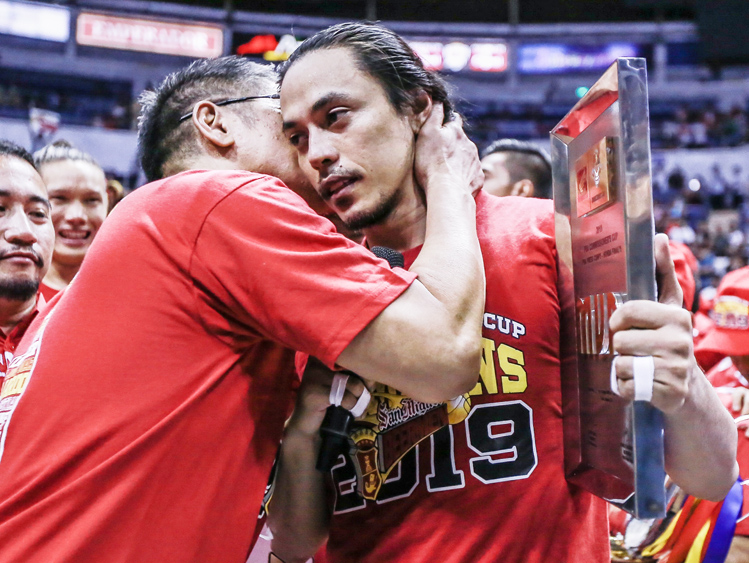
Ask the players who have been under him, one of the most common descriptions you will get for Coach Leo Austria is, “Parang tatay.” He cares and teaches his players with a fatherly touch that is starting to make an impact in the Philippine basketball scene.
His mind and heart coaching has already gotten him pages in the history of Philippine basketball. From ending Adamson’s decades long losing streak to Ateneo, to winning two PBA championships on his first year with the team and even coaching the first team to come back from a 3-0 deficit.
But what makes his method so different?
Care and compassion for constituents can be displayed in so many different ways. Coach Pido Jarencio is notorious for his expletive laden practices, but during game time he’s one of the first to rush to the aid and defense of his players. Coach Yeng Guiao is a known task master, openly scolding his players even during games, but in effect he can afford to blow his top and get ejected in their defense, knowing that the players will trust his system enough to run it without him.
But as for Coach Leo, he’s the cool calm voice of reason, both in and off the court.
So, what’s his secret to his almost-immediate success in the professional leagues?
During my undergraduate years in Adamson University, even as a rookie sports writer I never had a problem digging deep into the Falcons team for soundbites and interviews. Coach Leo was one of the most accommodating people I’ve ever seen. He welcomed me in practice, he welcomed me on the team bus and definitely welcomed me in the locker room.
His “welcomeness” allowed me to see how he treats, not only his players, but everyone around him.
In the locker room, he ends the weekday post-game victory wrap up with, “Masarap mag-aral, guys.” Encouraging his players to make the most of the athletic scholarships they have. At the back of his mind, it’s probably the same advice he would like his own son, Bacon who played for Ateneo, to hear from his coach.
One of Adamson’s school officials even recounted the early days of Coach Leo’s tenure in Adamson. He sat out key players after catching wind that they failed to attend class. He later apologized for the loss that ensued, but of course the school officials were more than understanding.
During the semis of the last Philippine Cup we got headlines quoting Coach Leo around the lines of, “Don’t wait for me to get angry.” It speaks to the kind of leadership he employs. In the college level he respected his players like his sons, in the professional leagues he treated them all as professionals.
It even came to the point that at the tail end of Season 76, when news broke out of Adamson not renewing his contract, ABL San Miguel Beerman Asi Taulava who just had his career resurrected because of Coach Leo’s ability to use him in the post, was very vocal on Twitter about his disappointment at the way the champion mentor was being treated. “You don’t deserve him,” posted Asi, pertaining to Adamson’s then management.
It’s tempting to compare this form of coaching and leadership to the fabled Wu Chi of the Warring States Era of China. A general who knew his soldiers by name, mourned their loss with their families and treated them as more than mere pawns on the battlefield.
His patience with his players has already reaped the fruits of success. Despite not coming up with any college trophies, he now has *four championships in the professional leagues, including the ABL. He did this while employing one of the most patient offensive systems in the leagues he has coached in.
His trademark is the high efficiency offense that delivers such a high rating that it more than makes up for his teams’ lack of pace. For this to happen, every player on the roster has to buy into the system and be willing to go against the grain of their personal desire and slow their own game down and go with the flow. And as Coach Leo has shown with his three PBA championships in four seasons with the San Miguel Beermen, it’s possible to do all that without the crack of the whip.
Greatness does not have to be squeezed out by “rushing or dragging”; and it’s okay to say, “Good job.”
Coach Leo is an example of how care and compassion fits into being a successful leader. Respect and motivation can reap the same benefits as nearly decapitating your drummer with a cymbal. Hopefully more leaders, even outside of basketball will trade in their whips for compassion; heavens know we don’t need more slave drivers in our society.
*as of February 1, 2026 this number has since risen to 12 (1 x ABL, 8 x PBA Philippine Cup, 2 x PBA Commissioner’s Cup, 1 x Governor’s Cup)

About Us
Data-driven takes about basketball and everything around it.
Follow Me On
Subscribe To My Newsletter
Subscribe for new travel stories and exclusive content.
 Humblebola