
-
The UAAP has an Opacity problem
By: Toby Pavon
“Tell me why?”
This has been a common sentiment in the UAAP even before the start of Season 86.
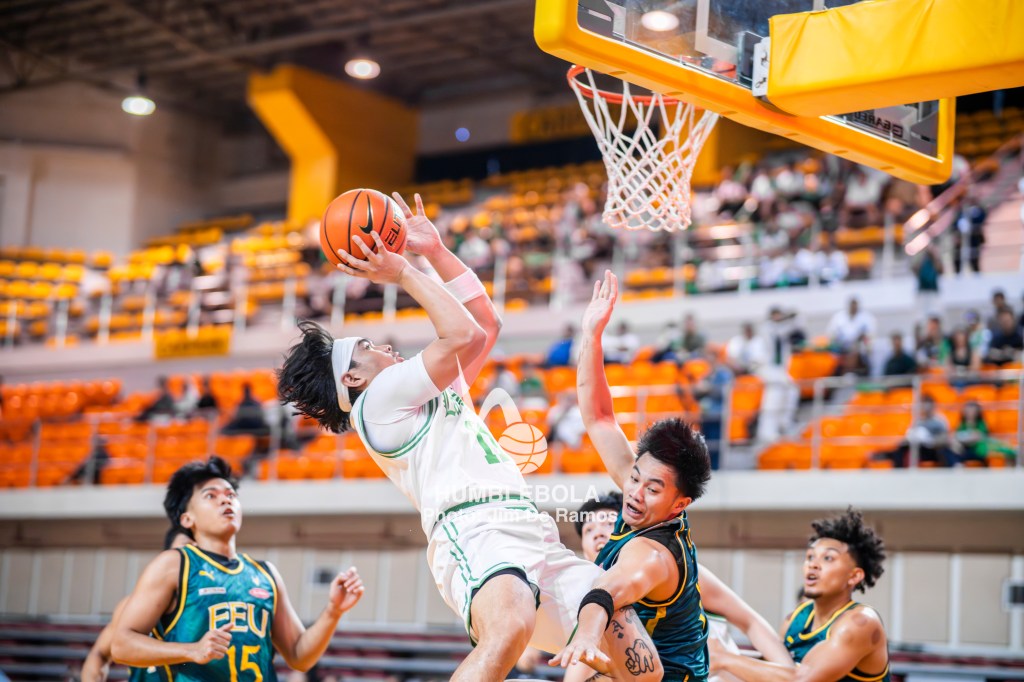
First was the matter of the amateur status of Francis Lopez. The UAAP Board put the matter to rest, deeming Lopez eligible to play in the UAAP, citing technical reasons for the unanimous decision.
“Documents and available evidence to us were reviewed, and it was found by the eligibility committee and approved by the Board of Managing Directors that he was eligible”
Executive Director Atty. Rebo SaguisagBased on reports and the public statements, it would seem that the board came up with the decision because nobody really questioned his eligibility. It is always good to see a student-athlete be given a chance to compete on their terms, however, it begs the question, what if somebody did question his eligibility?
As far as reports go, Francis Lopez had already signed and accepted payment for a contract with Overtime Elite, an alleged professional league based in Atlanta, Georgia. However, things fell apart when his visa application was denied, with his management group later declaring the contract “void ab initio”, which set the basis for him retaining his amateur status and continuing to be eligible for the UAAP.
None of this was contested, litigated or even discussed at a level of any significance, partially because people didn’t see a problem with him playing in the league, and partially because, such a discussion is impossible. We don’t know where exactly the line between professional and amateur is drawn for the UAAP.
More productive discussions could have been had regarding this if only the UAAP had a rulebook that was made public. There were plans to make one at one point, but it’s unclear if it materialized.
Were a student-athlete to find themselves in a similar situation, and another member team wants to question their eligibility, how would the Board rule, then? Cross the bridge when they get there? That doesn’t sound like sound policy *pun intended*.
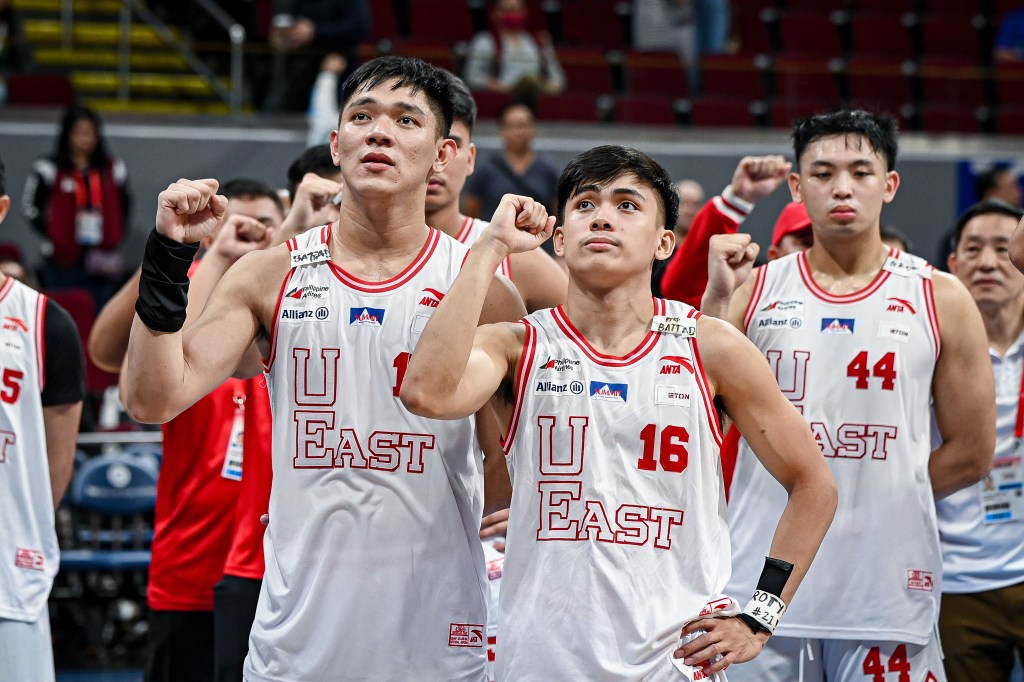
The issue has recently been a matter of debate because of the recent suspension of University of the East’s Precious Endurance Momowei after incurring his second unsportsmanlike foul of the season in their game against De La Salle. Many had already expected the suspension given the two-unsportsmanlike foul rule has long been known to fans. What raised eyebrows was how the outcome was different from that of JD Cagulangan who had incurred a second unsportsmanlike foul in the Finals of Season 85.
Fans had expected Cagulangan to serve his suspension on the opening game of Season 86, however he was there to lead his team to victory. In search of an answer, the clearest is the following:
“I was asked this during opening weekend and finally got an answer from an official source: JD Cagulangan wasn’t suspended in UP’s first game this season following his unsportsmanlike foul in G3 of the S85 Finals because it wasn’t decided/announced by the prior commish in the 48 hour span after the game took place, which is a league rule.”
Naveen Ganglani on Twitter, October 11, 2023It turns out that the suspension was averted due to a league rule where the suspension should be decided or announced within a 48 hour span from the game where the second unsportsmanlike foul took place, otherwise they won’t impose the penalty.
Okay. We’ll respect that. Rules are rules.
But who knew of this rule?
This is not to comment on the propriety of the rulings of the board, but rather to point out how frustrating the current state of rule-application for the UAAP is. It’s hard for fans and other stakeholders to keep up with decisions without feeling like they’re arbitrary.
It had gotten to a point wherein even a member of the Board had resigned. Although no reason was given for his resignation, the common sentiment is that it’s linked to how the Board ruled on Momowei’s suspension vis-a-vis the alleged infractions of other student-athletes from other member schools.
The UAAP has had a history of having unpredictable rule-application.
When Angelo Kouame was naturalized through an act of congress, there were reports about whether Ateneo could field another FSA that season since “technically” Kouame was already a Filipino. Again, the UAAP Board put the issue to rest by creating a new rule where to be considered a local, a student-athlete must have been naturalized through the administrative process and not through act of Congress.
It wasn’t like Ateneo was planning to recruit another FSA, anyway. They pinkie swore on it.
Okay. We’ll respect that.
But, why the distinction?
The current state of policy-making in the UAAP is undeniably shifty and unpredictable. Sometimes they make decisions that contradict the expectations of the general public and point to a rule that was apparently there… but who could review it? Other times, they simply make up new ones. Are their rulings wrong? This is not what we’re here to discuss. We have to believe that the UAAP Board has the best interest of all its members and stakeholders in mind whenever it comes up with these resolutions and decisions.
The UAAP Board has a tendency apply construction of the rules liberally or strictly on a case-by-case basis, which is not without its merits. Sometimes it rules that its rules apply based on where the previous school of the student-athlete is located, like in the case of Angelo Kouame, other times, it based on whether student-athlete is a foreigner like in the case of Emmanuel Ojuola.
Again, not here to question the propriety of those rulings.
So what’s the problem?
Students, alumni, fans and other stakeholders cannot help but express frustration over not being able to predict how a controversy in the UAAP will be resolved. Yes, there are times where rules have not accounted for particular circumstances which requires deliberation by the board to make decisions that might have to be applied pro hac vice. But for the simpler things, there has to be an effort to be more transparent, which starts with letting the public know what exactly the rules are.
Knowing who can compete and when they can compete is crucial for athletics programs to plan out their player development strategies, and most importantly, not to give their student-athletes false hope that they will be able to compete in the UAAP. For the fans it’s just a general feeling of fairness, knowing that everyone is bound by the same rules.
Without a tangible, transparent way for fans and stakeholders to know what the rules are, there’s no way for them to have a fruitful discussion as to whether or not the rules and the league’s policies are proper, and whether or not they take the league in a direction that people want to go. It’s also the only way that member schools can advocate for their student-athletes effectively.
The UAAP is a league that belongs not to its sponsors, its media partners or even to its Board, but to the students, alumni and administrators of its member schools. It belongs to the fans who enjoy watching dreams come true on the hardwood, so the league and its leadership should be encouraged to let its stakeholders in and let the “see how the sausage is made” so to speak, and help them understand why decisions are being made the way they are. Otherwise, everyone who wasn’t in the room where it happened will be left with speculation forever brewing in their heads, never satisfied with quoted unnamed sources and unofficial releases of the explanations as to “why?”.
-
Just getting started: Underdog Defending-Champions on the Rise
By Eriko dela Cruz
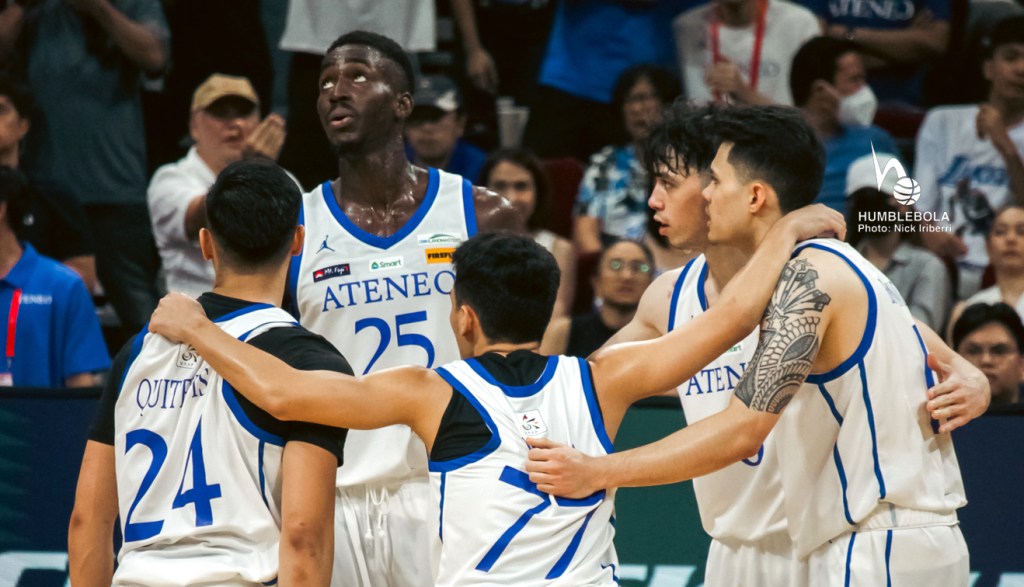
To say the Ateneo Blue Eagles had wild first round is a massive understatement.
The Season 85 Champions end the first round with a 4-3 record– a record that features losses from teams at the bottom half of the standings, and wins against two of the most stacked teams in the league. Amidst the chaos that is the first round, the tail end of the first round is a sign of better things to come for Ateneo.
The Blue Eagles are executing their plays better
In the first game of the season, the defending champions hardly looked like their old selves. They looked uncomfortable with the sets they were running on both sides of the court. It seemed like they were not familiar with their roles, until a switch was flipped late in the fourth quarter. Even during losses, flashes of brilliance showed, but those flashes died out rather quickly due to inconsistency. Against UP, pick-and-roll plays were well-timed, defensive assignments were well-covered, and the little things that do not show up on the stat sheet showed up on the floor.
Kai Ballungay and Chris Koon are emerging as primary options
When the play breaks down, the Eagles have gone to either Kai or Chris to create opportunities. The two veterans have proven to be the best creators in a system that values movement. With range that extends beyond the three-point line, Ballungay and Koon are the best three-way threats Ateneo has. Defense sagging? Three. Man on your grill? Blow-by. Double team? Find the open man.
Mason Amos and Jared Brown are earning their minutes on the floor
After the departure of Forthsky Padrigao to improve his life, a huge hole was left at the point guard slot. Everybody expected Ian Espinosa to be the next man up, being on the reserve list last season. No one expected rookie Jared Brown to be THIS good. In a league where Fil-Ams generally have a hard time at the point guard position, Jared fits the role like a glove. Nothing much can be said about Mason Amos other than HOLY SH*T THAT KID’S GOOD. Hehad a rough start, but with more game reps, he could be the runaway Rookie of the Year.
More Raffy Celis and Kyle Gamber?
As Coach Tab Baldwin said at the press conference after their blowout win against UST, “I think players create opportunities for themselves, and also scenarios create opportunities. Both Kyle (Gamber) and Raffy Celis have done a great job in practice. They’ve been stellar in their work ethic, but both also joined us late so they missed half the year in terms of preparations.” (tab-on-ateneo-rookies-players-create-opportunities-a5172-20231020) In the second round, with more practices under their belts, they may be unleashed little by little, easing them into the rotation.
Tab Baldwin.
If there is any coach who can whip a team filled with rookies into shape, it’s him. In Season 79, he took a supposed rebuilding team, still smarting from the departure of a total of seven crucial players, to the Finals. While the season is still young and unpredictable, it would be foolish to bet against the guy who has made the Finals in all his seasons at the helm so far.
The first round has been very tough for the Ateneo Blue Eagles. But if their history is anything to go by, they’re just getting started.
-
Pride, Puso, Palaban, Paano na UST?
By Eriko dela Cruz
Alfredo “Pido” Jarencio first came into the UST coaching limelight as a Glowing Goldies (as they were known at the time) legend dipping his toes into collegiate coaching for the first time. He was brought in to replace Nel Parado whose helmed a disastrous UAAP Season 68 which saw UST miss the Final Four bus.
He didn’t exactly hit the ground running in his first coaching stint, as most of the players on that roster were recruits of other coaches. While talent like Jemal Vizcarra, Jervy Cruz, Dylan Ababou and Jojo Duncil were there, unfortunate events (Jemal Vizcarra’s injury and John Lee Apil’s untimely demise) saw them in a 2-5 hole. It took a while, but Pido finally started to get through to his players and they eventually picked up the pace and barged into the Final Four and ultimately the Finals where they faced a juggernaut in Coach Norman Black and the Ateneo Blue Eagles.
We all know the story. Doug Kramer’s literal last second shot in game 1. A storm (pun intended) of points in game 2. Brown butterfly and ultimately ending 28 years of frustration for UST in game 3. Pride, Puso, Palaban. – Pido
The following seasons were up and down for Coach Pido and UST, as they made a smattering of Final Four appearances (2007, 2009, 2011, 2012, 2013) and two finals appearances (2012, 2013) but failed to re-capture the magic of 2006. Even then, there was a certain swagger and hunger in him and his Growling Tigers that forced opposing coaches to take them seriously regardless of standing.
Fast forward to 2023, the UST basketball program is again in a rut, floundering at the bottom of the rankings season after season, a shadow of the once-mighty team that went toe-to-toe with arguably the greatest team the UAAP has ever seen– the 16-0 Ateneo Blue Eagles. Who do they call to right the ship? None other than UST’s most beloved coach, the last to successfully bring the korona back to España.,
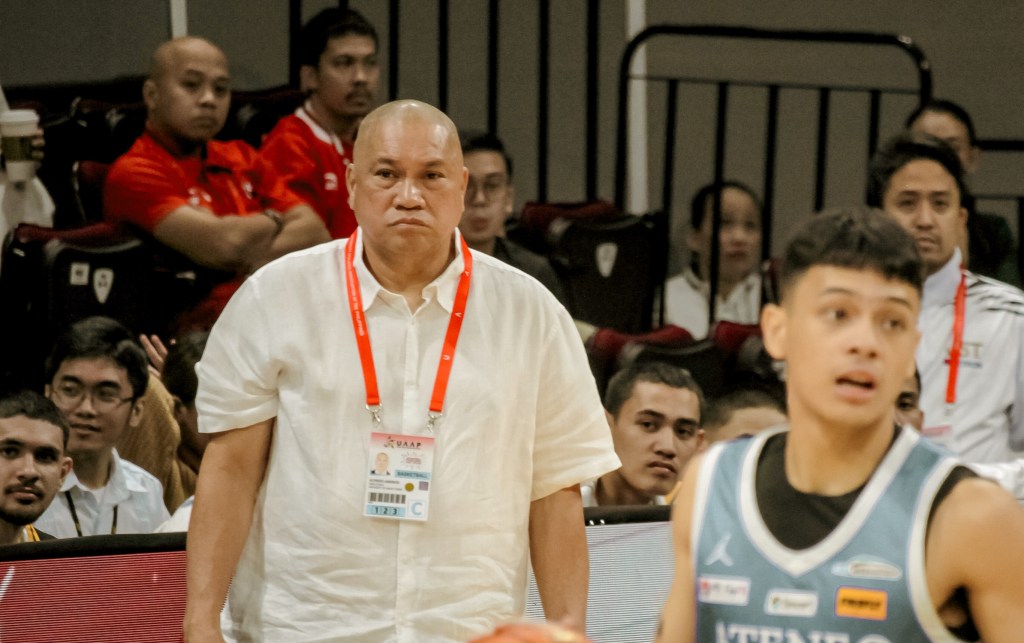
But six games into the season, the man at the helm today seems to be very different. Yes, on his lanyard the ID card still reads Alfredo “Pido” Jarencio. He is still the same stout man with the lowest-maintenance haircut possible. He still has the same humor. And yet he’s very different.
He is no longer out to prove himself having already become the standard. The fire in the sidelines seems to be a parody of the one that once blazed inside of him decades past. Now, he seems more like a glamor coach, one with a storied history of battling the Norman Blacks and Franz Pumarens of the world, armed with super friends and backed by one of the Philippines’ biggest corporations. Six games in, having coach Pido return to UST seems to be more of a novelty rather than a strategy. A feeble attempt to recapture the Pido magic that once was in order to make UST great again. Pride, Puso, Palaban seem to be just words that start with the same letter and no longer the team mindset.
The good news is, there are still eight more games in the season to right this sinking ship.
To stand a chance of doing that they have to find the Pride, Puso, Palaban in this new batch of Tigers. The talent is there. Nic Cabañero, Ivanne Calum, Christian Manaytay, and SJ Moore are good players to build around. Much like 2006, coach Pido has to make do with the cards he is dealt and maximize their talents. He has to be the one to instill the winning mindset to his boys, and make them believe that they pose a challenge to any team they face.
Before the korona, Tiger Power has to first come back to España.
-
HEY, THEY’RE LA SALLE-ING AGAIN

BY KYLE REINER PINEDA
Reading Time: 3 minutes
The Boys from Taft have an infamous trend in recent years. Lead throughout the game, looking as if it’s just another win on the calendar, but fall apart in the fourth quarter one way or another.
Take for example the game versus Ateneo this season or the knockout game versus Adamson to make the Final Four last season. Certain key players started out hot but waned when the lights were brightest.
Showing up when it matters most is a culture that Coach Topex Robinson is trying to instill into his players. That next man up mentality is what the former PBA and NCAA coach is bringing to the collegiate level that every player needs to work for his minutes no matter your reputation and rotation before. Bad habits are still evident from the Green Archers with blowing leads or missed rotations but it is this culture of accountability that La Salle is instilling even with the coaching staff. Point the fingers to the players, coaching staff, or the system. This is a problem La Salle need to solve if they have championship ambitions this season.
“At the end of the day I coach this team. I lead this team. When we win or lose, I take responsibility for it and unfortunately, those decisions are magnified when you lose a game.”
- Coach Topex Robinson on Earl Abadam’s benching in the 2nd Half versus National University
Green Archers fans should breathe a sigh of relief in having a coach capable of making adjustments when needed. The La Salle fanbase has notably has a reputation for being loud and impatient. Excellence is demanded from their coaches and players, and immediately put anyone that doesn’t live up to their expectations on the chopping block. Each time a coach underperforms, the community calls for their head.
Aka—La Sallians want their La Salle team to– La Salle. And Coach Topex Robinson is in the midst of changing that by instilling his brand of basketball. Compare La Salle to the biggest sports teams in the world with a long heritage—Ferrari, the Los Angeles Lakers, or Manchester United. Win and be heralded as the savior of the sports brand or lose and it is as if you have nowhere else to hide.
This season there are only a few clear-cut contenders for the UAAP title, and La Salle is definitely one of them despite being in what for other programs would have been a “rebuilding year” due to the coaching change.
Shades of the past are still evident from the team from stagnant offenses, rushed shots, and mental mistakes on defenses. These will be growing pains for the Green Archers but with a new culture brought in by their new head coach, there’s hope that the bad habits, the coaching carousel and the end-game collapses become a thing of the past. But they better find their footing quick to build momentum as they head into a crucial Round 2 for seeding eliminations.
-
The Adamson Blue Collar Falcons

Heading into UAAP Season 86, one of the biggest questions for the Adamson Soaring Falcons was whether they would be able to establish a team identity early enough in the season.
Afterall, despite their Season 85 roster being all eligible to play this season, several roster shakeups meant what was supposed to be their biggest asset—maturity, has been taken away from them and they are again forced to find themselves.
Last year the Falcons established themselves as a balanced scoring team with Jerom Lastimosa leading the attack. But many of those scorers, Lenda Douanga, AP Manlapaz, Aaron Flowers have for one reason or another opted not to return, leaving a void to be filled by new faces and new names. It also doesn’t help that Jerom Lastimosa has been missing due to an injury.
Fortunately, with 5 games under their belt and a 3-2 record, the Falcons have found a new identity rather quickly—a team that works.
There’s no other way to put it, the Soaring Falcons aren’t the most talented team, they aren’t the fastest, they aren’t the most athletic, they aren’t the most strategically sound, they aren’t the tallest and they aren’t the most efficient team in any aspect. Yet, despite all that, they hold a favorable record and look poised to make another run for the Final Four.
They have been doing all this without a go-to player. No Jerom Lastimosa to play iso-god for them, no Lenda Douanga who they can feed in the paint for easy points anymore. This lack of a go-to player who they can just feed the ball to and clear out has forced them to become the team they are– a team that puts their heads down and puts in the work.
This is in stark contrast to how they played early in the previous season. One of the most notable aspects of their game previously was their offense. Season 85 saw a lot of crisp passing from the Falcons, often ending up at the hands of their go-tos. A common criticism was that they had a tendency to over-pass, hesitating to pull the trigger unless they were one of the two designated scorers. Not anymore.
What used to be hesitation has turned into patience. Relieved from the pressure of having to feed Lastimosa or Lenda, all Falcons on the floor have the green light to shoot as long as it’s a good shot within the flow of their offense, and to get that green light they have to actually run their offense. Instead of looking for Lastimosa, they’ve been looking for the next pass. Instead of looking for Lenda, they’ve been looking for the open man. They’re working the ball through screens and hand-offs, patiently attacking the defense until an opening reveals itself.
This was most evident against Ateneo where they didn’t let an early offensive barrage from the defending champions dishearten them. Instead of panicking and trying to go shot for shot on threes, they slowly worked the ball inside to their cutters and the closest person they have to a go-to player—Cedrick Manzano in the paint.
Jed Colonia, Vince Magbuhos and Joshua Yerro took turns repeatedly penetrating through the backdoor, punishing Ateneo’s lack of rim protection in order to cut down what looked like a daunting 19-point lead.
Their identity shines through not only in their offense, but in their defense as well. Just when it looked like Joseph Obasa was going to be the key to punishing the Falcons’ lack of size, they took on the challenge of denying Obasa the paint opportunities he was able to convert early in the game. There was also a commitment late in the same game to switch on Ateneo’s picks, challenging every shot they can.
While they were out-rebounded by Ateneo, they made up by finding turnovers and gunning for loose balls. The way they forced the turnovers wasn’t like in the past under Franz Pumaren where their gameplan involved strangling the opposing offense into submission, forcing them to give up the ball. Instead it was a more disciplined, staying in front of their assignments, executing their pick and roll defense and living with giving Ateneo contested shots. Their court-sense allowed them to recognize bad passes and pick them off as well.
Without go-to players that they are expected to depend on on either end of the floor, their roles have been democratized, making it so that anyone who can pitch in, in any way simply does. If one misses, everyone goes for the rebound, if they don’t get the rebound everyone gets back on transition defense. There’s shared responsibility in this team because their new go-to isn’t a single player nor a system—it’s their work.
With two games left in the first round, the Soaring Falcons have a chance to solidify their claim to a Final Four spot. Both are opponents that are motivated and capable of going toe to toe with any team in the UAAP, so expect these blue collar Falcons to roll up their sleeves and get to work once more.

About Us
Data-driven takes about basketball and everything around it.
Follow Me On
Subscribe To My Newsletter
Subscribe for new travel stories and exclusive content.
 Humblebola