
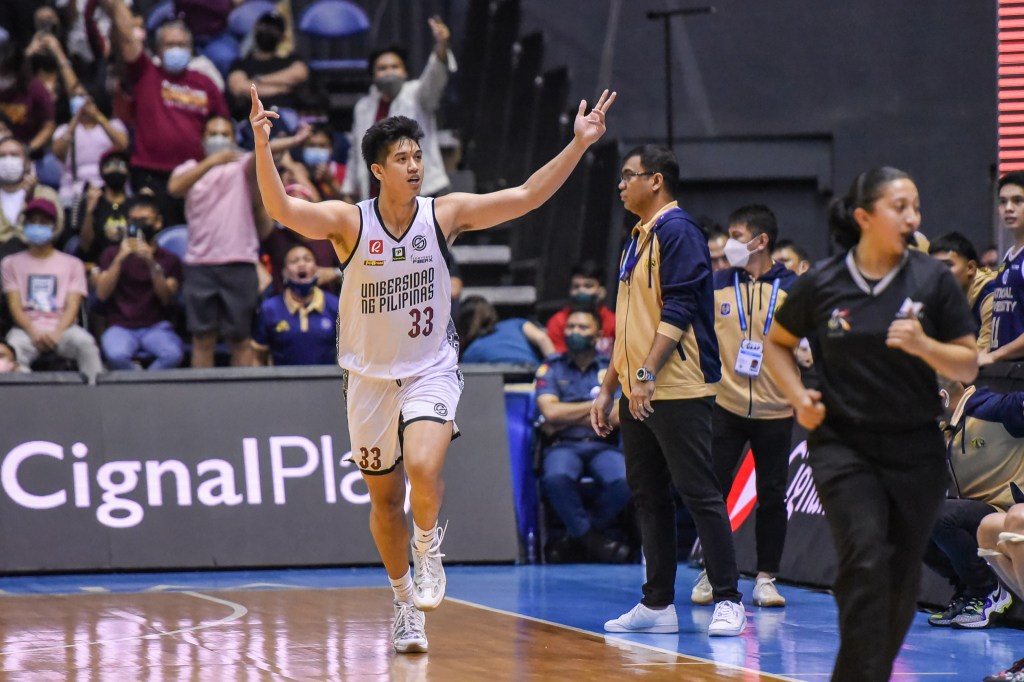
Every time there’s recruitment news about a student-athlete transferring to a school with a known wealthy sponsor, two questions immediately enter the minds of fans everywhere: 1) How much money was offered for them to make the transfer; 2) How much will they be earning to play for that school program.
No school will admit to flashing cash at a recruit for them to transfer and play for them. The official stance of the schools and the leagues they are a part of, is that collegiate leagues are amateur leagues, hence, there is a need to uphold the spirit of “amateurism” within it. This means turning a blind eye, or simply refusing to acknowledge reports of student-athletes getting hefty sums of money, properties and consideration in exchange for their commitment to the school.
To this end, there’s a significant portion of the vocal online space that believes college sports has long abandoned the spirit of amateurism, and that it is already a de facto commercial enterprise, and so, they can just drop the veil of amateurism. Embracing its commercial nature will allow leagues to create policies that allow all teams to engage in these highly commercialized practices and regulate them, evening the playing field for all (except for those who have less resources).
Unfortunately for this crowd, the schools can’t, and the schools wouldn’t want to.
Educational institutions cannot declare that they are commercializing their sports programs because it would be unlawful. The Student-Athletes Protection Act of 2014 provides in its declaration of policy that:
“SEC. 2. Declaration of Policy. – Article XIV, Section 1 of the 1987 Constitution recognizes the role of the State to protect and promote the right of all the citizens to quality education at all levels, and to take appropriate steps to make such education accessible to all. Further, Section 19(1) of the same Article provides that the State shall promote physical education, sports programs and competitions alongside training for international competitions to foster self-discipline, teamwork and excellence for the attainment of a healthy and alert citizenry. Thus, the State shall recognize and uphold the rights of student-athletes to further hone their skills and abilities in their respective fields of amateur sports without neglecting their education and general well-being.
It is the intention of this Act to protect and promote the rights of the student-athlete, who is, first and foremost, a student. To this end, the rights guaranteed by this Act and the obligations imposed on schools and athletic associations and their officials, athletic directors, coaches, members of the coaching staff, administrators, alumni, and representatives shall seek to ensure that the student-athlete attains quality education while honing his/her skill and reaching his/her full potential as an athlete in an amateur sports setting.”Republic Act No. 10676 – Student Athlete Protection Act of 2014
As such, educational institutions are required by law to maintain an “amateur sports setting” for the benefit of their student-athletes.
But aren’t student-athletes already earning from their play? No, not in the way you think at least.
According to the same law, student-athletes are allowed to receive reasonable allowances and support from their schools in order to train and compete. The UAAP for example, has fixed maximum allowances for athletes to be Php15,000 a month. This is hardly a living wage, especially as compensation for such valuable talents as theirs. In theory, these benefits are the means by which the schools can support their students that compete for them, because competing is hard.
This is a far cry from the supposed Php10-million, houses and lots offered to some student-athletes to compete for a school– the supposed “bag” that is supposed to be okay for them to “get”.
While student-athletes are overtly being given support to allow them to train and compete, they are not (as far as the public is concerned) directly compensated for their play. Even in the USA where the US-NCAA has lifted the iron grip on student-athletes being paid because of their status on the team, directly paying them is still prohibited. The US-Supreme Court ruling only opened the gates to athletes earning through their name, image and likeness (N.I.L.). This means they’re allowed to profit from the use of their likeness and name, meaning they can be on commercials, do events in their names, do paid endorsements of products and the like but not to be paid to play.
Being paid to play is what separates a professional athlete from an amateur. Being a professional athlete is also what separates an employee from a student.
This is why schools cannot “give” student-athletes “their bag”. They are mandated by law and State policy to maintain the amateur environment for their students to compete in. More than that, it would be against their interests to commercialize their leagues and their athletes.
Allowing for the explicit commercialization of student-athletes means that they cease to become student-athletes and instead become employees-of-the-school-who-also-happen-to-be-students. This drastically changes the dynamics because employees have different rights from that of a student-athlete.
One of the rights of an employee is security of tenure, which means their spot on the team cannot be whimsically taken from them without just or authorized cause. This was demonstrated when Alvin Teng successfully sued the Negros Slashers after they terminated him for calling in sick during the 2000 MBA Championship Round. This would mean schools cannot cut an athlete for performing poorly academically since their scholastic performance is not a valid condition for maintaining continuous employment.
Treating athletes as employees rather than students takes away the ability of schools to teach them discipline at best, and prevents them from focusing on anything other than their sport at worst.
More importantly, the engaging of professional athletes to represent a school in competition runs counter to the objectives of an educational institution. Ask yourself, “What good reason does a school have to spend tuition money or donor money to pay professional athletes to compete in their name?” This is different from funding a sports program where its students will have a chance to engage in different disciplines, part of the holistic development of students.
If we are to accept that the engagement of professional athletes by schools is in order to turn a profit through marketing or advertising revenue or sponsorship deals, then the next logical steps will be for them to maximize this model and continue to focus on commercializing not only their athletes, but the school itself. It won’t be long when schools cease to be educational institutions and become enterprises for the sale of exposure generated by their teams.
While it is only right for athletes to be able to profit from their play, looking at schools to open the floodgates toward explicitly giving them their bag might not be feasible for the foreseeable future. The status quo relies on the participants continuing to hold up the veil of amateurism, no matter how fictitious it may or may not be. Openly recognizing and embracing the commercialization of the leagues will have sweeping effects on all the stakeholders, the schools, the student-athletes, the boosters, the students and even the fans. Are they- nay- we ready for that change?
The trend of using what should be an amateur endeavor in order to earn a living is less indicative of the character of the athletes and schools that participate in the practice, but instead is more a telling symptom of the professional sports landscape– that there aren’t enough opportunities for athletes to make a living playing their sport.
Fans should rightfully call for athletes to be well compensated for their efforts, however that call for compensation should be hurled toward the professional leagues. Athletes who are deemed worthy of being compensated for their play should have more leagues, more options, to make this choice for themselves when they feel they are ready.
 Humblebola
Leave a comment